Disney and LGBTQ+ Representation — A History of Pulling the Rug Out
How many times can Disney run away from LGBTQ+ representation before we get wise?
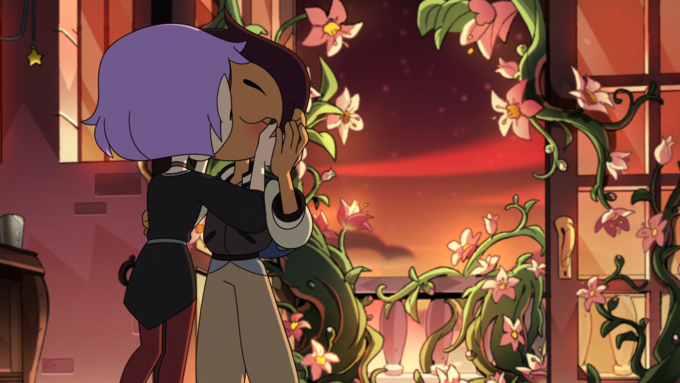
On May 21st, 2022 a revolution happened. You may have missed it.
In an episode of a Disney produced television show, The Owl House, two lead characters of the same sex, kissed. The show had been foreshadowing this for some time, but even knowing that it was coming did not diminish the triumph that young queer fans of the show felt when it happened.
Disney seemed to have come a long way from their history of quashing any overt LGBTQ+ representation in their television or movie programming. Indeed, only a few years before, Gravity Falls creator Alex Hirsch was still trying to work with gay characters he’d created for the show without having the Disney censor notice that they were, in fact, gay.
‘Back when I made GF Disney FORBADE me from any explicit LGBTQ+ re. Apparently “happiest place on earth” meant “straightest”… in 2012 the Disney censor note on this image [the kiss from The Owl House] would have been: “inappropriate for channel, please revise, call to discuss” (to avoid a paper trail)’ — Alex Hirsch on the Platform Formerly Known as Twitter
Hirsch went on to praise his friend, Owl House creator Dana Terrace, as well as to commend Disney for seeming to finally break through whatever block had kept them from evolving as studios like Dreamworks or Blue Sky already had. But Hirsch, also the voice of several characters on Terrace’s show, must’ve known that the celebration wasn’t going to last.
In May of 2021 Disney had already renewed The Owl House for a third season, but it was to be extremely truncated — three long episodes compared to the usual twenty or so short ones — and, as Dana Terrace revealed not long after, it was to be the last.
Terrace, obviously disappointed, chose not to blame the cancellation of the successful show on Disney getting cold feet about the diverse genders and sexualities of its characters. Instead, she said that her show — with the first same sex kiss in a Disney program, the first non-binary character in a Disney program, the first bisexual/pansexual/aesexual characters in any Disney program — was cancelled because a single decision maker at Disney didn’t like it.
“At the end of the day, there are a few business people who oversee what fits into the Disney brand and one day one of those guys decided TOH didn’t fit that “brand.”” — Dana Terrace on Reddit.
It is hard not to see that “brand” as being “for straight people.”
Disney had pulled the rug out from under its LGBTQ+ fans, and it wasn’t going to be the last time. Shortly after the disappointing renewal news for The Owl House Disney seemed ready to champion their queer employees in an even bigger way: politically.
Let’s jump to the dismissal of former Disney CEO Bob Chapek. Chapek had bungled a response to Florida’s odious, and clearly illegal, “Don’t Say Gay” law, which had been ratified in 2022, but ultimately ended up on the right side of history by saying that the company did, in fact, oppose it and would work, financially, behind the legislative scenes to try and have the law overturned. (This came after groups of key employees began threatening large scale rolling walkouts) The trouble was that Disney was struggling financially due to COVID and to being severely overleveraged after the purchase of Fox Studios and were facing a Governor who was making a run for the White House. They no longer held the big stick that they normally would’ve had when the Florida legislature struck back by attempting to dissolve the legislative zone — the Reedy Creek Improvement District — that the Disney company had tacitly controlled and upon which Walt Disney World sat.
It was during this tussle that Bob Chapek was dismissed and former CEO Bob Iger — who had conveniently left just prior to COVID and who was responsible for the Fox purchase — returned as some sort of symbolically heroic savior to the company that was, in many ways, in trouble because of decisions he’d made.
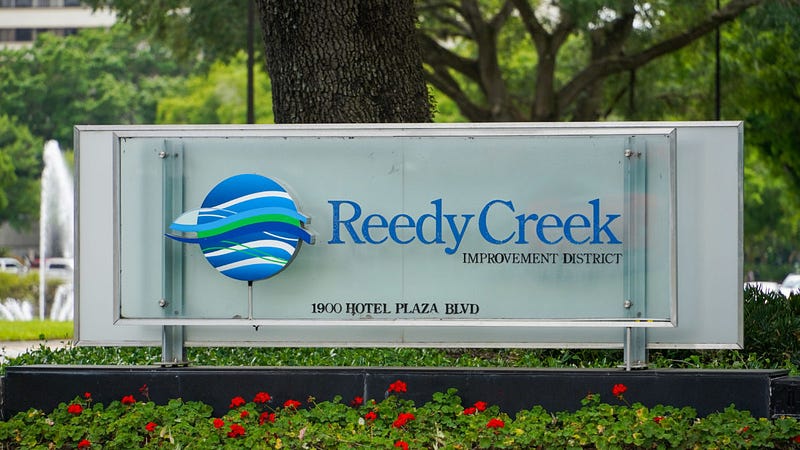
Eventually Florida discovered that they couldn’t dissolve the district without plunging the state into financial chaos; so instead they did something more brazen: they took over Reedy Creek, renamed it and replaced the Board with appointees named by Governor DeSantis. Bob Iger decided to fight and launched a lawsuit against the State in which the company’s primary financial driver, Disney World, rested.
So now you’re asking, well, wait, isn’t the company fighting the good fight here? Yes. Sort of. It’s what comes next that indicates that it might all have been for show and really a cover to give them time to sew a really nice white flag.
We covered this all earlier in a lot more detail here if you’re interested:
The Disney Company had this lawsuit sewn up with a five pronged attack that would have been easily winnable, even with DeSantis’ hand-picked judges. Oddly, as the case neared trial, the Disney Company dropped their most potent complaints from the suit and left only one: the First Amendment violation — much tougher to prove, but still possible. The first judge they encountered kicked out the case for a technicality. The company appealed because, well, let’s face it, it’s pretty hard to imagine as more clear First Amendment violation than speaking out against a law and having the government that implemented the law take over civic administration of your land.
Then, with hardly any fanfare, Disney dropped the case altogether. They pulled out that white flag and waved it as hard as they could.
Sure, Disney got a few compromises. Some of the more belligerent members of DeSantis’ hand-picked Board were swapped out, but, otherwise, Disney just handed the megalomaniacal Governor the keys and begged him not to bang it up too much.
That most American of companies gave the “Don’t Say Gay” State everything they wanted and, within a year, Disney’s political donations in Florida were right back at pre-pandemic levels, including to “Don’t Say Gay” backing Republicans.
For a brief shining moment it seemed like this group of people under assault from the Right, might have a champion in the largest entertainment company in the world.
And Disney abandoned them.
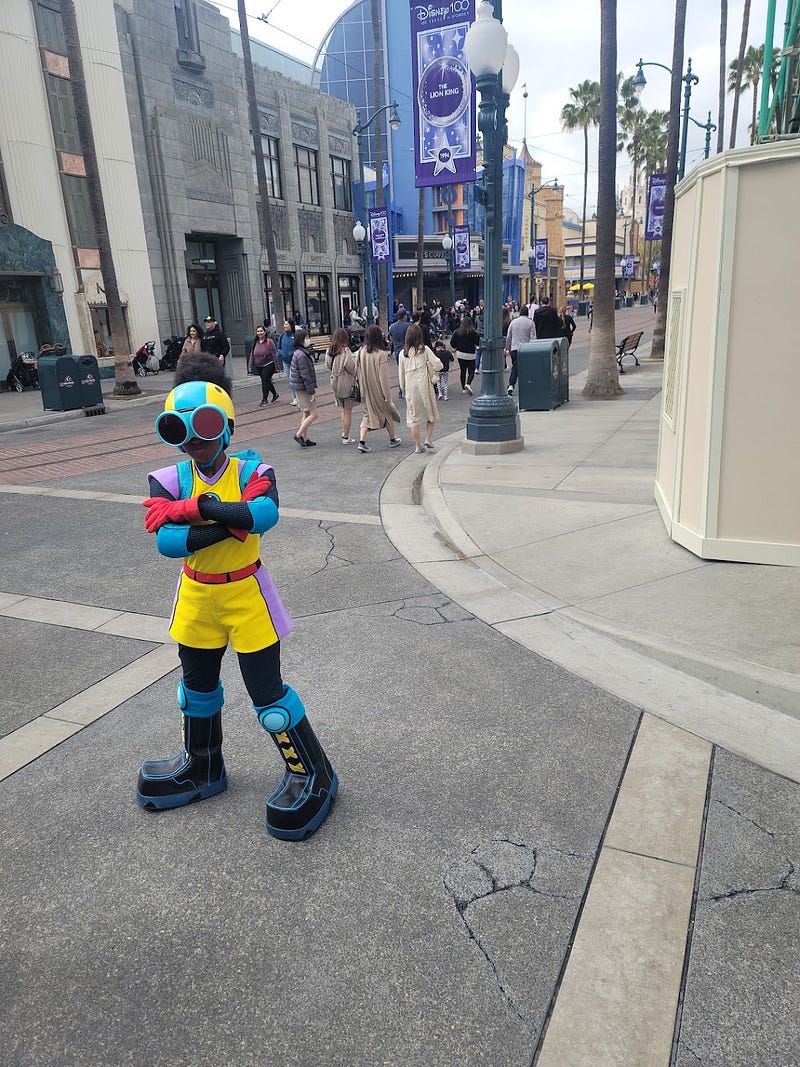
Marvel’s Moon Girl and Devil Dinosaur is a revelation. An animated series that digs deep into the nerdiest depths of comics canon, it’s a show that has managed to revel in the silliness of its source material while tackling extremely complex topics in ways that make the multi-billion-dollar Marvel Cinematic Universe (which it isn’t strictly a part of) feel stiff and shallow.
Moon Girl, from its first episode in February 2023, makes it very clear that its Lower East Side of New York City will be a broadly diverse one… You know, like it actually is in real life. Skin color, ethnicity, gender, sexuality; the spectrum is broad and it is normalized.
The show features gay parents, gay students, Disney’s third and fourth non-binary characters (the first and second were Raine Whispers and Masha from The Owl House) and at least one trans character: Brooklyn.
Brooklyn is introduced in the show’s first episode Moon Girl Landing and, though she’s played by trans actor Indya Moore, her gender is never discussed; not until an episode which had been scheduled to be aired early in the second season, The Gatekeeper.
It’s hard to know what was going on behind the scenes at a series like Moon Girl and Devil Dinosaur, but something happened where ten more episodes were produced for the second season than had been for the first and the season was split into two parts. It was as if, in spite of five Children’s and Family Emmy Awards and being shortlisted for a Peabody, the creators knew the writing was on the wall and they were racing to finish as many episodes as they could.
The tip-off to the production team might have been Disney’s refusal to air The Gatekeeper.
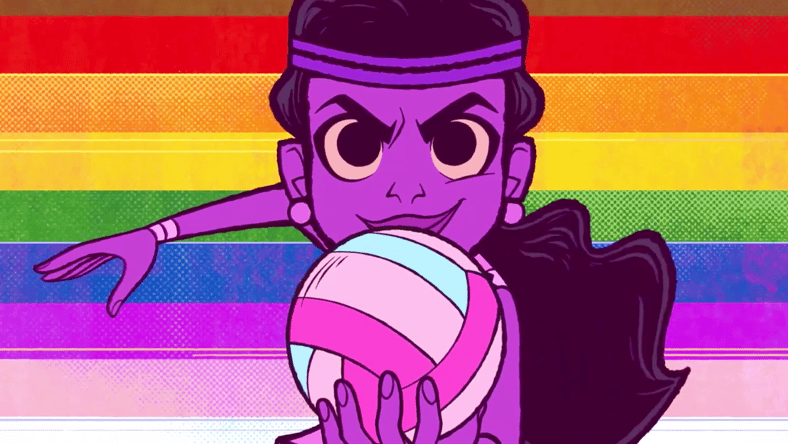
The episode takes on the issue of trans kids in sports very directly. Brooklyn is revealed to be a trans athlete on the school volleyball team who doesn’t like to remember the “dark times” when she was forced to play boys soccer. A coach of the rival visiting team discovers that Brooklyn was born biologically male and goes so insane over the fact that she uses dark magic to trap the team and keep them from playing. (Versions of the episode have been leaked on-line.)
It’s an emotionally effective take on a difficult topic and the choice of leaving Lunella (Moon Girl) as a supporting character to Brooklyn in this story gives some space for the audience to really get to know her and her relentless struggle against bigots who won’t let her be who she is.
This was, evidently, all a step too far for Disney who pulled the episode before it could air. Originally announcing that this one specific episode was not being banned, but only being “held” for unspecified reasons, production insiders suggested that it’s fate had been sealed. Not long after, it was announced that production on the series had never restarted after completion of the second season — Disney hadn’t exactly cancelled it, they simply hadn’t bothered to commission a new series.
Moon Girl and Devil Dinosaur is again nominated for five Children’s and Family Emmy Awards this year.
Disney had launched a gently progressive series for kids that was miles beyond the pablum that most kids shows are today and, seemingly without being asked, decided to cut something that they thought might offend somebody, and then they axed the show entirely, without taking responsibility for either action.
This all leads to the most recent Disney denial of the existence of LGBTQ+ people in the world, the removal of a trans character’s gender identity from the, seemingly snakebit, Pixar Studios television series, Win or Lose.
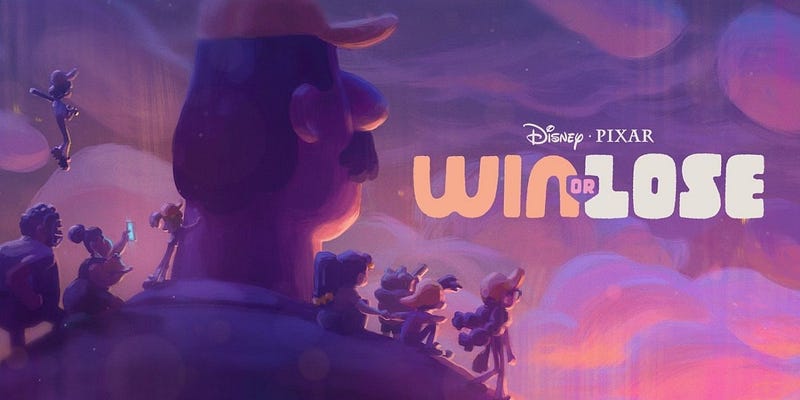
Win or Lose is a show that Pixar has been trying to get off the ground for almost five years now with an almost endless succession of delays pushing it to 2025.
Though the series has been complete for almost two years, Disney suddenly — clearly obeying the incoming President before being asked — demanded changes to one episode featuring a trans character.
All dialogue referencing the character’s gender identity, as well as a scene of her struggling to choose a bathroom to use, was removed effectively turning a trans character portrayed by a trans actress into a CIS character.
Disney’s wholly embarrassing response to the situation was this:
“When it comes to animated content for a younger audience, we recognize that many parents would prefer to discuss certain subjects with their children on their own terms and timeline.”
… which is a stunning statement from the company famous for killing Bambi’s mother as well as Simba’s father and using their theme parks for many years to serve as the mouthpiece of Monsanto. Is it truly too adult to say that some kids exist than it is to talk about death or sell napalm? For Disney, that’s evidently the standard.
Pixar insiders and ex-Pixar staffers have expressed outrage at the change:
“It hardly surprised me, but it devastated me. For a long time, Disney has not been in the business of making great content. They have been in the business of making great profits. Even as far back as two years ago when I was at Pixar, we had a meeting with Bob Chapek, and they were clear with us that they see animation as a conservative medium.” — Sarah Ligatich, a former Pixar assistant editor who worked on the series, to The Hollywood Reporter.
“The episode in its final form was so beautiful — and beautifully illustrated some of the experiences of being trans — and it was literally going to save lives by showing those who feel alone and unloved, that there are people out there who understand. So it’s just very frustrating that Disney has decided to spend money to not save lives.” — Former Pixar staffer who wished to remain anonymous to The Hollywood Reporter
But perhaps the most important voice belongs to trans actress Chanel Stewart who, at age 14, won the role in a nationwide casting search. (She is 18 now.):
I’m very disheartened, From the moment I got the script, I was excited to share my journey to help empower other trans youth. I knew this would be a very important conversation. Trans stories matter, and they deserve to be heard.” — Chanel Stewart
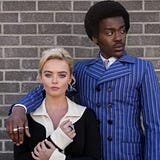
So where does this leave us? In many ways this feels like an exceptionally LGBTQ+ forward year for the teen/adult side of Disney. While the MCU has done a horrible job of representing diverse gender and sexuality in characters — don’t get me started on it taking 26 movies in the MCU before there’s a single same-sex kiss. (It’s in The Eternals.) — a new age seems to be dawning with Agatha All Along and its front-and-center gay representation. Disney has also been co-funding and distributing Doctor Who which is one of the most flamboyantly diverse shows on television right now.
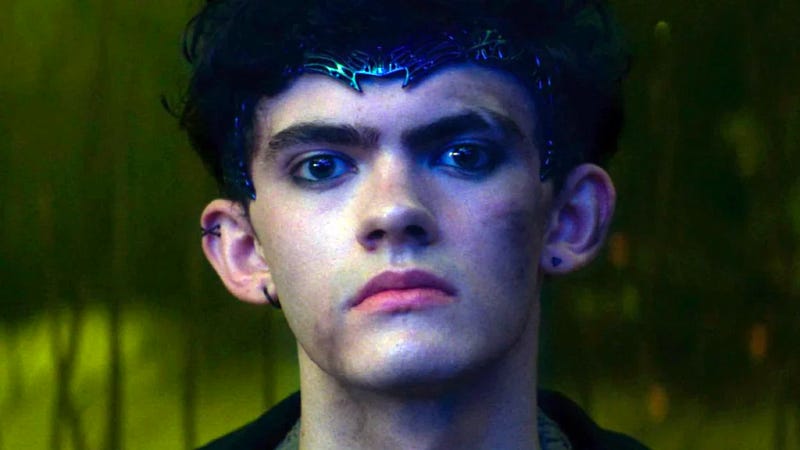
But will it last? When, as Disney is already telegraphing, the Young Avengers form in the MCU with, at least, two established gay characters — Wiccan and America Chavez (who IS gay in spite of Disney playing it down in Doctor Strange and the Multiverse of Madness) — will they also be converted to Republican-palatable CIS characters? The third series of Doctor Who hasn’t been commissioned; will it go the way of Moon Girl and Devil Dinosaur and simply be left to die in a table veto?
Given the history of this company on these issues, I wouldn’t give them the benefit of the doubt.
Help us keep the tea flowing at Abigail’s Army HQ. Please consider buying us a coffee or, better yet, tea on Ko-Fi.
https://ko-fi.com/abigailsarmy
Abigail’s Army is a progressive Disney fan group. We can be reached at our website:
Or on Medium:
Or over on Facebook in the Abigail’s Army progressive Disney fans group.
Or on Mastodon at @AbigailsArmy@mastodon.social.
Or on Threads at https://www.threads.net/@abigailsarmymajor
Or at https://bio.site/abigailsarmy