Disneyland Abu Dhabi — The Mouse as Kafeel
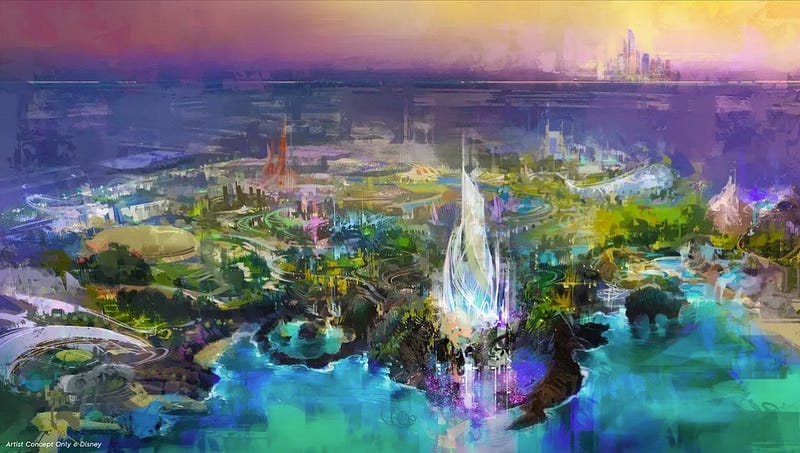
What does Disney want, what do they expect and what do they really understand about the motivations of an emirate?
Bombs are dropping near his new Disneyland.
The man who he and his brother were raised with — the man he also called “brother” — is managing an investment vehicle that bought a 49% stake in the American President’s family’s crypto firm, and then used the crypto from that firm to invest in a crypto brokerage that began heavily promoting the President’s crypto.
Between those investments, his brother helped make the Trump family-controlled business $187,000,000 with another potential $80,000,000 per year in interest without the American President having to lift a finger.
As for the Disney project itself: the kowtowing to the American President has surely been more than sufficient.
Disney has dropped all mention of inclusivity from shareholder and regulatory documents and were slowly purging LGBTQ content from their platforms. The Disney-CEO, Bob Iger, formerly at odds with the American President, was now running drawings and models of the new Abu Dhabi park by him before showing them to the public.
The President has surely seen that the Disney company has bent the knee.
If all that doesn’t get you a little protection from the bombs, Mohamed Khalifa Al Mubarak might have wondered, what would?
The Walt Disney Company today is a far cry from what it was during its founder’s life.
An entertainment company that was willing to make whatever struck Walt’s fancy, even if it meant losing money, produced an eclectic and eccentric collection of enterprises. While it seems commonplace now, the idea of a cartoon company making serious feature-length films, and then sliding into television and amusement parks, was shocking at the time.
History would have treated it as laughable if an astonishing amount of the work hadn’t been so sublime.
Today’s business world would never have allowed it.
What has the Disney Company then become in this modern era? Len Testa from TouringPlans.com has been quoted recently as saying that it has become a data analysis company, and that is pretty astute, but in the same way that Walt’s Disney was a movie company, TV producer, book publisher, music licenser, record producer and theme park builder; today’s Disney is a data miner, a venture capitalist, an asset manager, a real estate mogul and a collector/manager of intellectual property.
They still make some great movies, but the movies are grist for the mill.
The question then becomes, if the company isn’t wrapped in the personality of Uncle Walt, what is it? Does it have a moral center? It has become cosmopolitan since the 1980s with as many parks outside the United States than in; so is it still fundamentally patriotic? Its subsidiaries run the gamut from kid to teen to very adult films and theme park attractions, so does it still consider itself “family entertainment?” These days we hear more about its political struggles and the fluctuation of its stock price than we do about “The Disney Way.” Has financial growth taken the role of ethical responsibility?
Because if you think it has, have I got a theme park for you!
Why Disneyland Abu Dhabi?
Bob Iger’s May 2025 announcement of a new theme park to be built in the United Arab Emirates was met with skepticism amongst fans and admiration amongst business leaders.
This was a hell of a deal, like the one The Mouse had made with Oriental Land Company for Tokyo Disneyland, but better. Disney is not going to put up a penny for construction or to run the park — this would all be handled by UAE company Miral — but they are going to make a fortune from licensing and, perhaps more importantly, they will be able to develop new theme park attractions for the rest of their worldwide parks on the Emirati dime.
Unlike what happened in Tokyo, Disney will not be catering to benefactors. The UAE needs Disney in their portfolio. With an aggressive tourism strategy — they expect it to contribute $112 billion (AED 450B) yearly to the GDP by 2031, from a pre-pandemic high of $49 billion (AED 180B) — Disney is a player they could partner with to breeze right past that goal.
So, The Mouse has enough bargaining power to insure control over the sandbox that the UAE and its quasi-governmental companies are building for them.
Everything is lined up, the government, developer and land owners are strongly motivated to get this done, and done well. The dominoes are lined up for The Mouse where they get to spend nothing and gain a tremendous amount.
Financially, this is a slam dunk.
In every other respect, there are questions.
What are the concerns with doing business in the United Arab Emirates for a company like Disney?
LGBTQ Human Rights Questions
Homosexual activity or dressing in a manner that the law describes as a “male dressing as a female” in Abu Dhabi is a crime punishable by jail time. If arrested and convicted of either of these things, the minimum penalty is six months in prison and the maximum, twelve years.
The UAE is more liberal that the rest of the surrounding countries and the consensus is that, while being gay is against the law, it is rarely enforced; particularly while the region is stable and pursuing positive corporate partnerships with the West.
Disney, being a generally well respected as a company in terms of LGBTQ rights with their “Inclusion Key” as one of the five tenants of the company’s published business philosophy platform, has raised some eyebrows by removing all reference to it in shareholder proxies and statements over the last year as part of Bob Iger’s “turning down the volume” on politics strategy.
It doesn’t leave one with the sense of a company intending to stand their ground if push comes to shove, but this is speculation. It is fair to say that the UAE’s “don’t ask/don’t tell” version of thier laws is operating how they would like it to — a lot of gay people live there just fine.
The Kafala System
While concerns over LGBTQ rights in the UAE may be speculative, labor abuses by way of the region’s Kafala System are well documented.
During the first half of the 20th century, several economic booms caused a need for sudden, mass, imported, labor. In the 1920s it was the large scale harvesting of pearls from the Gulf and in the 1950s, oil. The Kafala System was put in place by governments unprepared to deal with large scale influxes of temporary workers and was a system by which a requirement for hiring immigrant workers was that a single Arab national — the Kafeel — would be responsible both for taking care of the worker and for their behavior while in the country.
It offloaded the need for government welfare programs to deal with them should something go wrong.
By the 1980s, the system had begun to morph from a care-taking system, to a system of indentured servitude.
Under the system, an employee’s visa allowing them to be present in the country is tied to their job. Often, employers would simply confiscate the visa upon the worker’s arrival, severely restricting the worker’s ability to move about the country, and their ability to leave.
Whether the employer held the visa or not, if the worker did try to leave, or if they were terminated, they could be reported as “absconded,” subjecting them to immediate arrest, detention, and/or deportation.
While it is officially illegal, many recruiters charge “recruitment fees” putting workers into extreme debt in order to gain what appears to be a lucrative job in the UAE. Often, though, upon arrival the employee would discover that the job was different from what they were told, with much lower wages, but the debt they had incurred to pay the recruitment fee forced them to take it on anyway.
Wage theft has been endemic. Wages could be cut, delayed or simply not paid with next to no recourse by the employee.
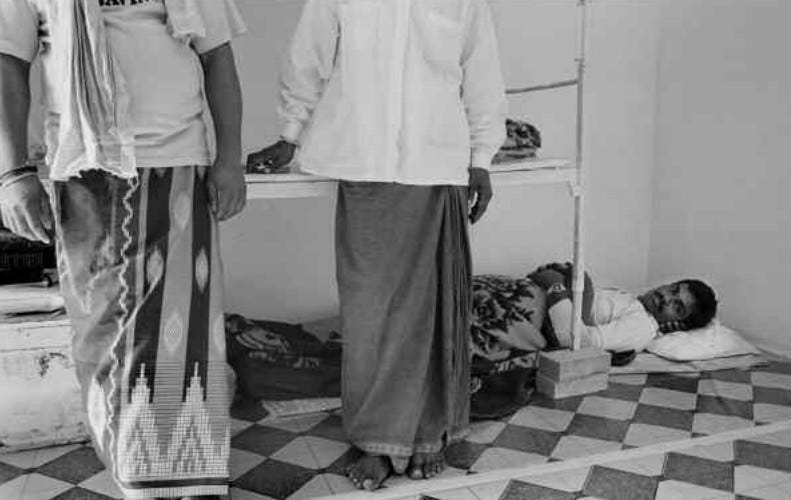
Employees usually needed to live in company housing which can be hygienically substandard and potentially dangerous.
Labor Unions are illegal in the UAE.
Political Instability
When I started working on this, political upheaval in the UAE seemed far-fetched. It is a business and tourism center with 80% of its workforce being brought in from other countries.
But now Iranian bombs are dropping on the ports a few miles away from Yas Island, the prospective location of the new Disney Park, and today the picture looks very different.
After the United States’ military assault on Iran, the Persian nation retaliated by bombing ports and installations in the UAE that held U.S. assets. And while officially committing to end the bombing of neighboring countries, Iran continues the assault on the UAE.
While the fate of an entertainment company is clearly not a primary concern during an armed conflict, the re-prioritization of funds due to regional instability combined with the unpredictable actions of America’s Commander-in-Chief (who is involved in this project in other ways we’ll soon discuss), show just how fragile the commitment to contractual stipulations might be.
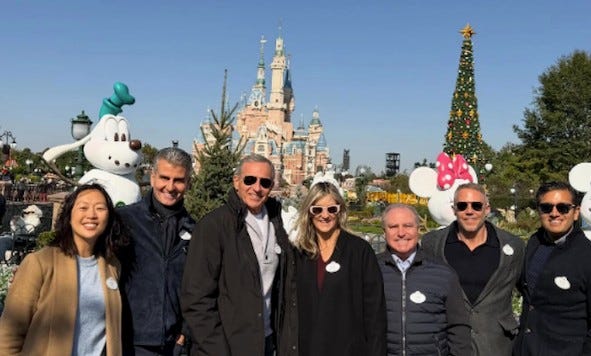
So surely the Walt Disney Company has accounted for all of this, right?
They have taken precautions, but the opacity of the inner workings of the UAE sovereign financial system is a difficult problem. The country has had special trouble dealing with subcontractors on large scale projects; the primary corporation may be in the spotlight and on their best behavior, leaving subcontractors relatively free of scrutiny.
Nevertheless, there are some encouraging signs from both sides.
Disney’s Human Rights Bulwark
First, let’s discuss the human rights mechanisms already in place at the House of Mouse.
The Human Rights Campaign’s Corporate Equality Index (CEI) is a national bench-marking tool that measures corporate policies, practices, and benefits related to LGBTQ+ employees and they have consistently given the Walt Disney Company its highest rating. Despite Disney’s recent messaging to stockholders, they are concerned about this stuff. The Inclusion Key may not be showing up in official statements to stockholders, but it still exists and the Disney Board has repelled attempts from activist stockholder groups trying to force DEI initiatives out of the company.
Disney also has mechanisms in place to help deal with other kinds of labor abuse. To work as a contractor for Disney, and this includes Miral even though Disney will not own the Abu Dhabi park, a company must be part of Disney’s Facility and Merchandise Authorization (FAMA) system. To be in this system, the company must meet Disney’s Minimum Compliance Standard (MCS).
Here are the 4 automatic fails that will get a company kicked out of the FAMA and immediately severed from a relationship with Disney:
- Involuntary Labor — This would include things like recruitment fees and passport seizure
- Child labor
- Coercion and Harassment
- Discrimination
And here are the 3 30-days-to-fix standards:
- Contract Substitution — as mentioned above in the Kafala System
- The “Three-Strike” Safety Rule — Three serious incidents of health or safety violations
- Unauthorized Subcontracting — Not only must the company contracting with Disney remain in the FAMA in good standing, every company that it subcontracts with must as well.
These are not shallow promises, either. Disney has stopped work on major projects for violations of the MCS. Notably during construction of Shanghai Disneyland they shut down a number of subcontractors that had been hired without being cleared through the FAMA process and also revoked authorization for the Dongguan Qing Xi Juantiway Plastic Factory due to substandard working conditions.
They WILL use these tools, if they know what’s happening.
The UAE and Its New Labor Standards
The United Arab Emirates have taken some encouraging steps, themselves, to curb Kafala abuses. A series of laws passed in 2025 and 2026 have added oversight and prosecutorial heft to some of the prior avenues of abuse. The shift from formal sponsorship by an employer to contractual agreements could be a big step; or, given that the visa is still tied to employment, it could be semantics.
The issue of an employer reporting an employee as having “absconded” has not been banned, but it has been somewhat formalized. The visa is still connected to the employer, but there is a judicial process that must be navigated before the employee is labeled as a criminal. And there is an appeals process for the employee to try to prove that they either didn’t leave by choice or that there were serious abuses. (As of this writing, that appeals process has never been successfully triggered.)
A more solid bulwark has been raised against wage theft and job substitution with all contracts being agreed to digitally, and a pay system that will alert UAE officials if the amount doesn’t adhere to what’s in the digital contract.
Disney has already been granted visibility into these contracts for the UAE theme park.
The issue of recruitment fees also has increased scrutiny and heightened punishment but given that most of these infractions happen in the worker’s country of origin, not the UAE, it’s still a blind spot.
Subcontractors have been dealt with in a deft way within the new laws: they have become as much the responsibility of the company they’re contracting for as the employees have been, historically, to their Kaleefs.
Substandard housing was already illegal when it was happening, but new AI-based risk indicators and enforcement mechanisms are intended to curb the problem.
Visa confiscation was already illegal when it was happening. It is still illegal.
How committed are Disney and the UAE to avoiding these problems?
The United Arab Emirates is something of a closed ecosystem. The systems of sovereign wealth — the lines between government and commerce are so vague as to be practically nonexistent a great deal of the time — serves transparency poorly. If a business wants to do something sketchy and the people in charge of the business are also in charge of the legal mechanisms that would judge the legality of that thing, well…
The reforms going into place, specifically to avoid this impression of an insular oligarchy, are necessary for the country to form partnerships with the west, which has become a transformational mover of their economy, but a huge question remains about what international observers will be allowed to see.
Labor abuses by subcontractors have been a real issue, but the UAE legislature has made some positive moves to address that issue, and Disney has had guide rails in place for a very long time. And yet the structure remains untested. The stakes are high, the laws are new, and being in a war zone certainly isn’t helping to lend the impression of stability.
Let’s discuss some of the key actors on the Civil Rights/Labor Rights piece of this puzzle.
The Arbiter — Ministry of Human Resources and Emeritisation
The UAE’s new laws are a step in the right direction, but it is important to point out that the country still treats these kinds of crimes as regulatory violations rather than the human rights crimes that many of them are.
While early in the new laws’ implementation, the UAE’s own Ministry of Human Resources and Emiratisation (MOHRE) reports (with a puzzling sort of pride) that only 1.4% of labor disputes reported made it to court last year. The publicly available worker welfare reports of the last decade have disappeared and moved into the privacy of the C-suite as violations have become reclassified as a metric similar to Governance, or Sustainability, rather than a human rights violation.
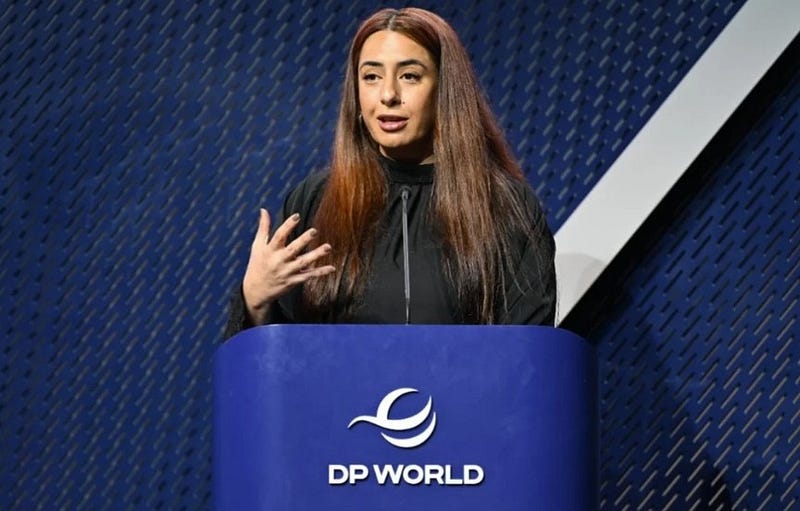
The Facilitator — Permanent Committee for Human Rights/Hind Al Owais, Director
If we are to talk about justice for laborers in the UAE, we have to talk about the organization that serves as the face of the UAE’s human rights reforms: the Permanent Committee for Human Rights (PCHS).
The group serves as a sort of switchboard between all the human rights stakeholders: employers, the UAE government, the United Nations, outside partner companies. The PCHS is where Disney would go first to settle a labor issue during the construction of its new theme park; it is a very public-facing safeguard.
And if the PCHS is the face of UAE labor reform, its Director, Hind Al Owais, is the face of the PCHS, or at least she was until something happened this February.
The last dump of files related to the Jeffrey Epstein sex-trafficking case revealed over 400 emails from, to or mentioning Al Owais, including ones in which she discussed “getting one girl ready” and her sister who she described to the convicted sex trafficker as, “even prettier than me.”
The emails date to around 2011–2012, after Epstein’s first human trafficking conviction.
(Notably, the head of DP World, the UAE’s most robust shipping port and supply system, has also been taken down by the Epstein files.)
The emails were certainly enough to raise eyebrows, but never overtly indicting. However, rather than condemning her outright, or building up a defense for her, the UAE government did the worst thing they could’ve possibly done: they scrubbed her identity from all websites they had control over.
The face of human rights in the UAE was digitally disappeared; after her relationship with a sex trafficker was revealed.
She has not officially stepped down from her position.
It’s a bad look.
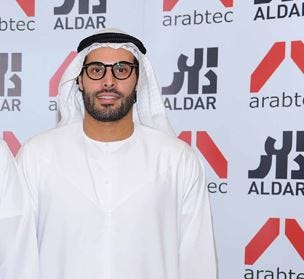
The Project Manager(s) — Miral and Aldar/Mohammed Khalifa Al Mubarak, Director
Miral is the company that is serving in the same role for Disneyland Abu Dhabi that the Oriental Land Company did in Tokyo Disneyland. It will coordinate the construction, run the park, and develop attractions per the request of Disney’s Imagineering team.
Miral also “owns” (as a sovereign grant from the Abu Dhabi government) the land that the park will be built on.
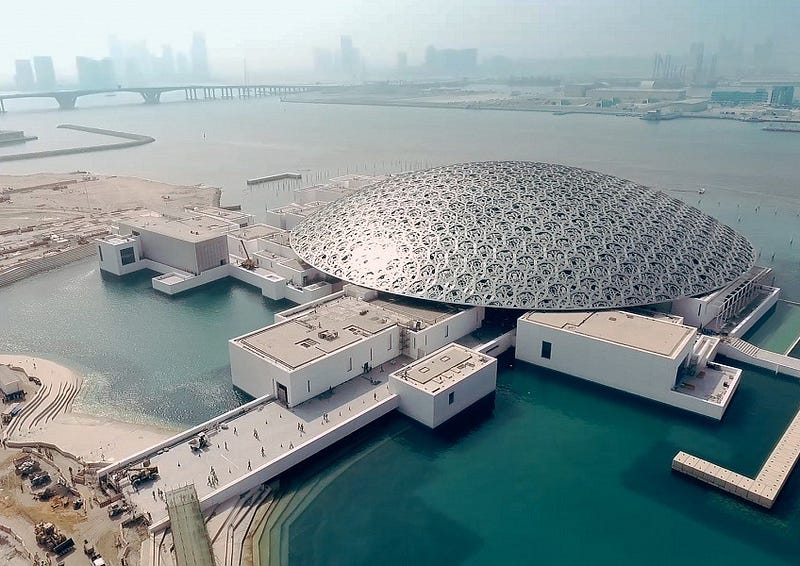
They specialize in building tourist destinations, primarily theme parks. They built most of the parks now on Yas Island, the destination for the new Disney park, which includes Ferrari World, SeaWorld, Yas Waterworld and others. They also serve as an operational management entity for these parks, as well as many of the parks and attractions in the neighboring Saadiyat Cultural District.
Miral is a private, government-owned, enterprise and its chairman is also a member of the Abu Dhabi Executive Council and Chairman of Abu Dhabi’s Department of Culture and Tourism (DCT): meaning that he runs the company most responsible for achieving the UAE’s tourism goals and he is also a significant part of the government apparatus that sets and measures those goals.
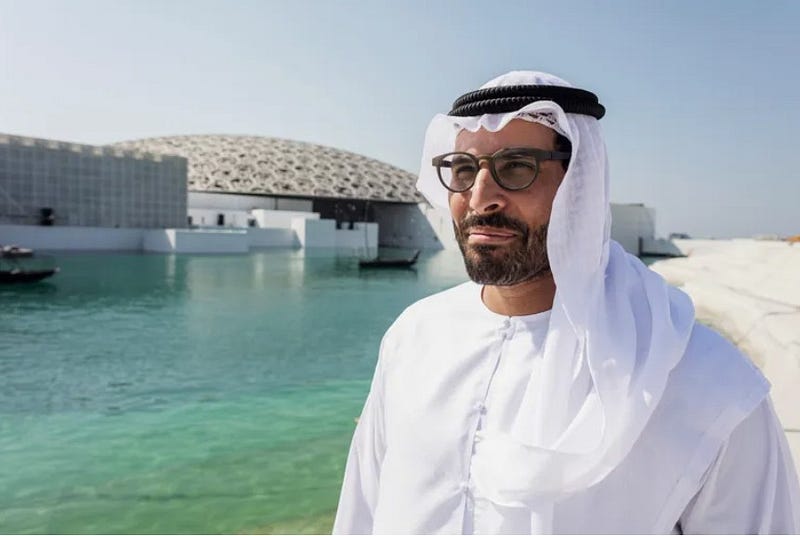
His name is Mohamed Khalifa Al Mubarak.
Aldar Properties is Abu Dhabi’s leading real estate developer and land manager. They manage and build the civic infrastructure around the tourist destinations: lodging for workers, utility infrastructure, shopping malls, etc.. They are also the master developer of the land on Yas Island and the Saadiyat Cultural District: meaning that they are doing the urban planning piece of Yas Island and work hand-in-hand with Miral to make sure the infrastructure is in line.
Aldar is serving much the same role for the under construction AI campus Stargate UAE. More on this shortly.
Aldar’s Board Chair may sound familiar. His name is Mohamed Khalifa Al Mubarak.
Miral was not always the primary developer of neighboring Saadiyat Cultural District, but the story of how they came into the role is instructive.
In 2009 Human Rights Watch dropped a bombshell of a report about labor issues involving the treatment of workers constructing a long-delayed tourism project. It read like a laundry list of Kafala abuses and questioned why, time after time, the Tourism Development Investment Company (TDIC), who had been running the projects, kept promising reforms without, solving many of the problems. ()
After this report several changes were made, including independent monitoring, new laws and some new housing, but when revisited in 2015, many of the same abuses existed. By 2016 His Excellency Mohamed Khalifa Al Mubarak (remember him?) had been named the new Chairman of TDIC — he was already the Chairman of the Department of Culture and Tourism (DCT) for which TDIC was the construction-side extension — and soon after that TDIC itself was dissolved.
By 2022, its assets had mostly been absorbed by Miral — the company in control of building the Disney park — who’s chairman also was (say it with me now) Mohamed Khalifa Al Mubarak.
Some steps had been taken to resolve the labor issues, but the Human Rights Watch boycott of Saadiyat Cultural District ended with the completion of the construction projects from which the labor issues sprang rather than a resolution to the issues themselves.
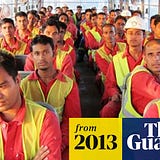
The change of leadership for Saadiyat Cultural District had gone from Al Mubarak (Chairman of the Department of Culture and Tourism) to Al Mubarak (Director of TDIC) to Al Mubarak (Director of Miral).
A version of this story could be told which suggests that Mohamed Khalifa Al Mubarak was the end of the road for many of these labor abuses, that we are just looking at the transition and succumbing to a tendency to attach him to the corrupt side when we should really look at the reforms now in place. Let’s hope that’s true; he was, to be fair, a part of the group that worked on the new laws.
But there is also a version where Department-of-Culture-and-Tourism-Mubarak realized that the public-facing scandals of the early-2000s were going to render the UAE’s tourism goals unsustainable, so he needed them dealt with quietly and through an opaque bureaucracy, and he worked with the MOHRE to define a system that would accomplish that. The reforms are there, they are in place, but they not only have not been tested; the visibility of the systems suggests that we wouldn’t really know if they had.
Whatever happens, Miral is taking on a project that is not only larger than any it’s ever taken-on before, it will almost triple the size of the company’s portfolio; while in an active war zone.
It is hard to imagine this happening without compromises.
Remember earlier when I mentioned how government, developer and landowners were lined up for success? It is easy to ensure coordination, and collusion, between those three forces when they are all represented by one guy.
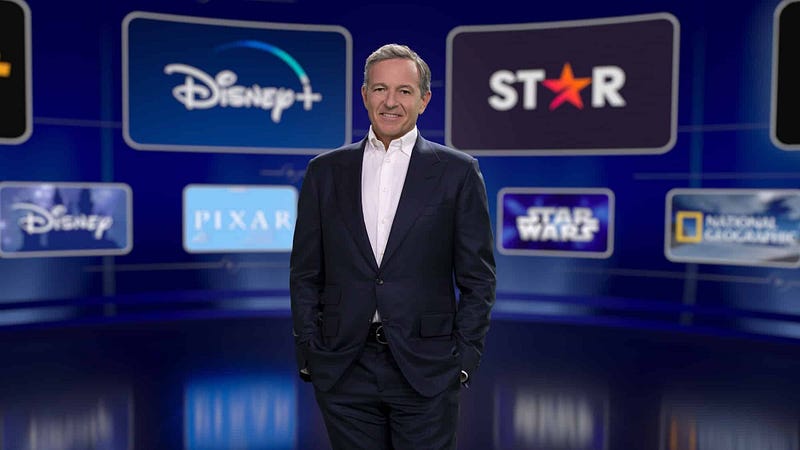
The Empire Builder — Disney CEO, Robert A. Iger
Bob Iger took a moderately successful Walt Disney Company and turned it into the largest entertainment company in the world. Mostly he did this through a frenzy of acquisitions.
If Michael Eisner had proven that bringing in non-Disney intellectual property was a winning move, Iger took the idea to its extreme. The company seemed to thrive on a diet of Marvel, and Lucasfilms, and 20th Century Fox, for a while.
Iger must have been feeling pretty good as he was shepherding hit movies and lucrative theme park profits and watching the stock price soar. Good enough that when he disagreed with Donald Trump’s decision to abandon the Paris climate talks, he very noisily resigned from the business leaders advisory group the White House had invited him to be on. He also publicly criticized Trump immigration policies.
This was a man too powerful to worry.
The Fox acquisition, however, may have over-leveraged the company at the worst possible time, the beginning of the COVID epidemic, and at that stress point, Bob Iger retired. A few disastrous years later, he came back to try and right the ship in who’s hull he himself may have punched the first breach. He was not so cocky anymore.
Immediately he began to pull back politically, insisting that the company needed to “turn the volume down.”
He dropped out of a slam dunk case against the Florida legislature in which they had tried to punish the company for protecting its LGBTQ employees. In doing so he gave up the private zoning authority that the Walt Disney Company had held in Orlando since Walt’s day.
Under his direction, the company began to get very nervous about any gay representation and, instead of reflecting the generally queer-positive company that they had been for some time, things started to look a little… bigot-y.
And then came the weirdest moment: when Bob Iger, CEO of the Walt Disney Company, took the conceptual drawings of the proposed UAE theme park to President Donald Trump — the guy who’s committee he’d walked out on, the guy who’s immigration policy he’d openly criticized when it wasn’t a fraction as terrible as it is now — to get some sort of approval.
Turning the volume down looked a lot like capitulation.
(Bob Iger stepped down as CEO a few weeks ago to be replaced by Josh D’Amaro. D’Amaro is a blank slate as far as all this goes.)
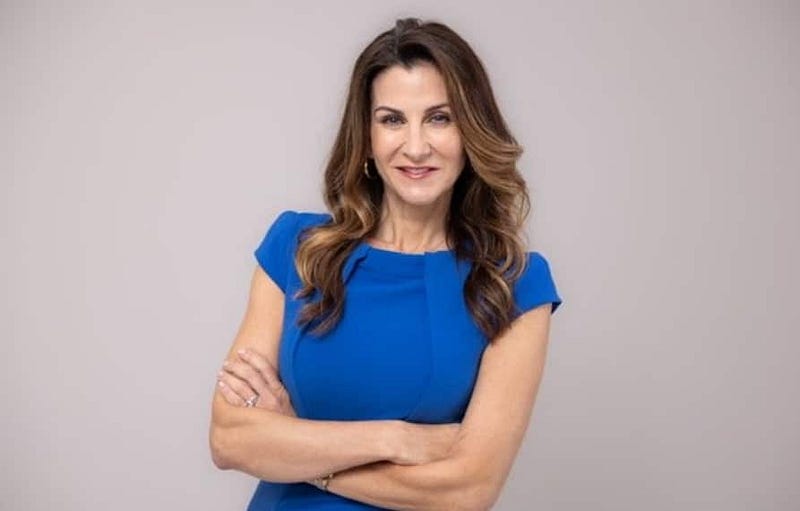
The Spin Artist — Tasia Filippatos (née Scolinos)
How seriously is the Disney Company taking the concerns about the UAE? We have no insight into the internal discussions between Bob Iger, new-CEO Josh D’Amaro, or any of the rest of the C-suite, but we do have one indication that, at least as far as how human rights violations might affect the company’s image, they may be taking it very seriously indeed.
That indication is the appointment of Tasia Filippatos to the position of President & Managing Director of Disney Parks International.
Prior to this, Filippatos was head of Disney Consumer Products, the retail wing of the Disney Company. While this is not an unheard of path to parks — the disastrous reigns of Paul Pressler and Bob Chapek came via this lineage — something notable about Filippatos’ pre-Disney career stands out: her career managing communications for the George W. Bush administration.
“This matter began as an inquiry into whether any of these 8 U.S. Attorneys were fired for improper reasons. After several hours of testimony by the Attorney General, over five thousand pages of documents released to Congress and hours of interviews with other senior DOJ officials, it is clear that the Attorney General did not ask for the resignation of any individual in order to interfere with or influence a particular prosecution for partisan political gain. The focus of most of today’s hearing was not on whether the decisions were improper, but rather on the management of this process and misstatements the Attorney General has acknowledged he made about his involvement in this process. The Attorney General himself has stated that this process was not as rigorous as it should have been and he has since taken steps to institute better management practices with respect to U.S. Attorneys. He has taken full responsibility for his actions and in recent weeks has taken steps to leave the Department in a stronger and better place from the lessons learned from this matter.” — Tasia Scolinos on the 2006 DOJ Attorney Firing Scandal
Prior to her matrimonial name change, Tasia Scolinos served as a spokesperson for the Department of the Treasury, then on the Department of Homeland Security transition team before becoming Deputy Assistant Secretary for Public Affairs at DHS, and then Director of Public Affairs at Department of Justice. On top of having to defend the existence of DHS (a stance that bears increased scrutiny today), Scolinos was the public face of the 2006 US attorney firing scandal as well as defending the Bush administration’s expansion on warrant-less wiretapping.
Scolinos was a political crisis manager, effective at unifying her department’s messaging, burying hot-button inquiries in rhetoric and misdirection (“It is really just a matter of semantics.”) and hanging on like a pit-bull to her talking points.
Her appointment was announced as part of as larger corporate shuffle following the exit of CEO Bob Iger, and perhaps she was elevated to this position simply because she was the best person for the job; but if Disney wanted to find someone tailored to spinning any troubling messaging coming out of the Abu Dhabi project, they’d be hard pressed to find a mouthpiece with more experience than Tasia Filippatos.
Ok, let’s try this a different way… How committed are these business leaders to following the rules of law?
The question of whether or not both Disney and the UAE stay the course indicated by their official policies and the laws that govern the rights of workers in the region, depends on the willingness of the participants to maintain a level of visibility into the project and, given the crossover between business and government in the UAE, a desire to voluntarily do the right thing.
With this in mind, we must discuss a parallel project, with many of the same officials — and their relatives — in charge of elements of both. How they handled this project and dealt with its legal hurdles are telling.
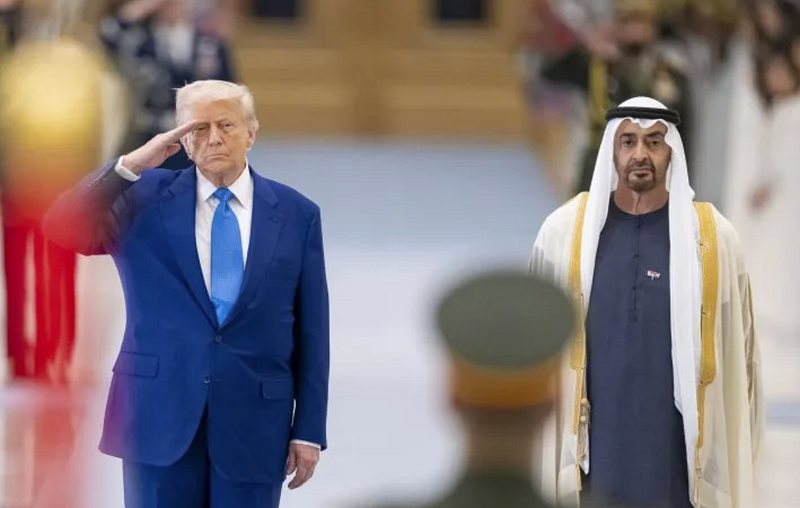
The Shadow Project — Stargate UAE/Mubadala/G42/MGX/World Liberty Financial/Sheikh Tahnoon bin Zayed Al Nahyan/Khaldoon Al Mubarak/Donald Trump
Stargate UAE is a massive AI facility being built in Abu Dhabi. It is a controversial project, but finds a major cheerleader in President Donald Trump, for reasons that will become clear.
Now we have to back up and take in some history.
In 1984 the UAE ambassador to France, Khalifa Ahmad Al Mubarak was assassinated leaving his two sons, Khaldoon Al Mubarak and Mohammed Khalifa Al Mubarak, orphaned. Sheikh Zayed bin Sultan Al Nahyan, the founding father of the United Arab Emirates, took in the two boys and raised them in the palace as virtual brothers to his own son Sheikh Tahnoon bin Zayed Al Nahyan.
We’ve already discussed the many roles held by Mohammed Al Mubarak — the man moving the lion’s share of the pieces for the Disney park — but let’s discuss his two “brothers” — one by blood and one by virtual adoption.
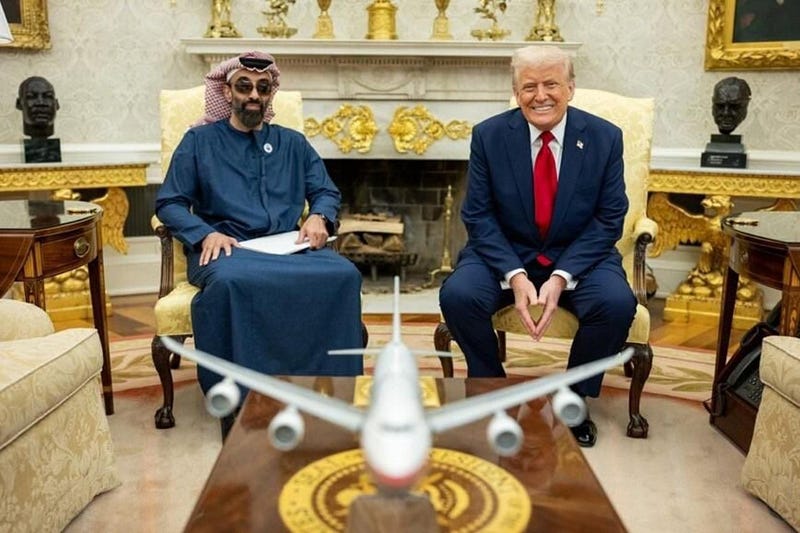
Sheikh Tahnoon is probably the most powerful man in the UAE, but for our purposes we want to draw attention to his Chairmanship of both the AI construction firm G42 and to MGX: an AI investment fund. He was, until February of 2026, the head of ADQ, the state run company that funds Miral (builder of Disneyland Abu Dhabi) and once ADQ got swallowed by a new sovereign organization called L’IMAD, he maintained an advisory role from its parent organization.
He also brokered a critical, and potentially illegal, deal with Donald Trump that allegedly led to deregulation of high-end NVIDIA chips now headed to the Stargate UAE campus.
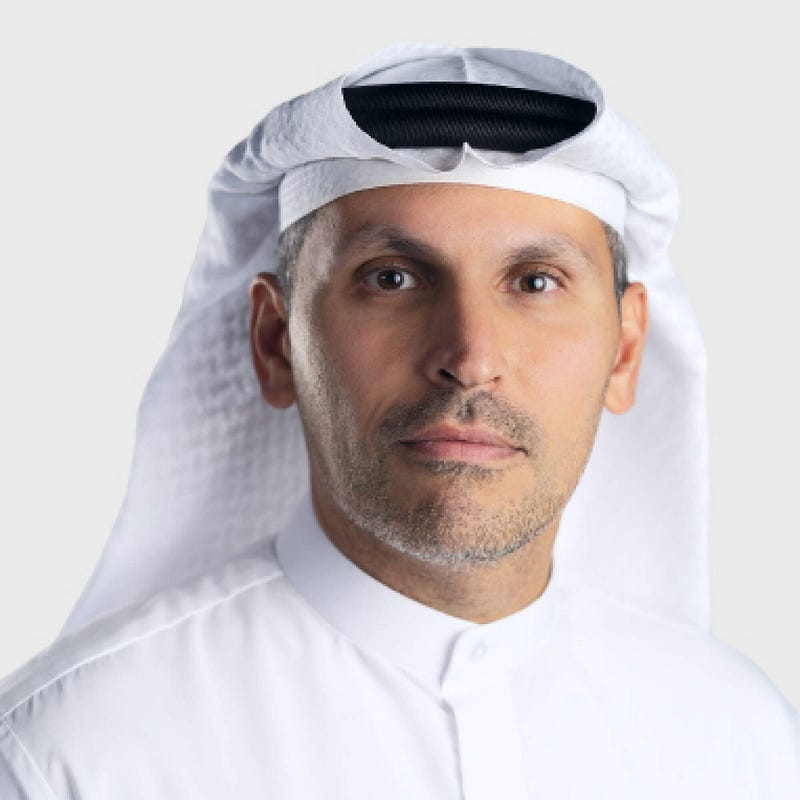
Khaldoon Al Mubarak is Managing Director and CEO of Mubadala, the sovereign wealth fund that fuels UAE’s growth including G42, MGX and Aldar Properties. He is also the Vice Chair of MGX, a Board member of G42, a Board member of Aldar Properties and a project lead on the Stargate UAE AI campus project.
Let’s sum up the scope of influence of the three brothers.
Mohamed Khalifa Al Mubarak has influence over:
DCT — Disney Project (Government Backing)
Miral — Disney Project (Theme Park Master Development and Landowner)
Aldar Properties- Disney Project and Stargate UAE (Land Development)
Khaldoon Al Mubarak:
Mubadala — Disney Project and Stargate UAE (Sovereign Funding Source)
MGX — Stargate UAE (Specialized AI Development Fund)
G42 — Stargate UAE (Lead Developer)
Aldar Properties- Disney Project and Stargate UAE (Land, Infrastructure and Urban Development)
Stargate UAE — (Direct Project Lead)
Sheikh Tahnoon bin Zayed Al Nahyan:
MGX — Stargate UAE (Specialized AI Development Fund)
G42 — Stargate UAE (Lead Developer)
ADQ/L’IMAD — Disney Project (Funds Miral)
Stargate UAE — (Allegedly Negotiated NVIDIA Chips for U.S. Investment Deal with Donald Trump Directly)
Aryam Investment 1 — Stargate UAE (via World Liberty Financial)
So here’s why all that’s important:
January 16th, 2025 — Aryam Investment 1, a company later revealed to be run by Sheikh Tahnoon, but at this point masquerading as a Delaware company, signed a deal to buy a 49% stake in a cryptocurrency enterprise primarily owned by the Trump family — World Liberty Financial — for $500 million.
Four days later, Donald Trump was inaugurated as President.
The following day, Trump announced a $500 billion AI project (not mentioning that it was not to be an American one).
April, 2025 — Donald Trump fires six national security officials who raise concerns about AI chip exports to the UAE.
May 1st, 2025 — MGX (Tahnoon/Al Mubarak) makes a $2 billion investment in cryptocurrency giant Binance. Instead of cash, they use the USD1 stablecoin, which is the primary crypto of the Trump family’s World Liberty Financial: the company that Sheikh Tahnoon’s Aryam Investment 1 just bought 49% of.
As long as Binance doesn’t cash out their USD1, and they haven’t yet, it will earn World Liberty Financial $80 million per year in interest just for sitting there.
Immediately after this, head of Binance Changpeng Zhao asks for a pardon from his conviction of money laundering.
Within six months, he gets it.
May 7th, 2025 — Mohammed Al Mubarak, Bob Iger and Josh D’Amaro make public statements announcing Disneyland UAE.
May 13th, 2025 — Miral and Disney announce that the new park will be primarily indoors.
May 15th, 2025 — Donald Trump visits Abu Dhabi to announce a trade framework and the “US-UAE AI Acceleration Partnership.”
May 16th, 2025 -Still in the UAE, Trump says, “Disney — I see their new theme park (Disneyland Abu Dhabi) is going to be incredible. Bob Iger was in my office the other day showing it to me.”
The same day Donald Trump commits to allowing the sale of 500,000 advanced NVIDIA chips to the UAE every year. This was previously blocked by national security concerns during the Biden administration. G42 is still on the security list, though.
May 22nd, 2025 — G42 officially announce Stargate UAE, a massive AI compound in Abu Dhabi, referencing Trump’s “Acceleration Partnership.”
June 11th, 2025 — Bloomberg reports that Binance helped build the code for World Liberty Financial’s stablecoin.
October, 2025 — Khaldoon Al Mubarak reconfirmed as Secretary General of the recently reconstituted Artificial Intelligence and Advanced Technology Council (AIATC) — the council that created MGX.
October 23rd, 2025 — Pardon for Binance’s Changpeng Zhao leaks publicly. Thumbing his nose at regulators, Binance begins heavily promoting USD1 sales on their site.
November 20th, 2025 — Though previously excluded due to security concerns, Trump explicitly approves the export of advanced NVIDIA chips to Sheikh Tahnoon’sG42, less than a year after Tahnoon’s ghost investment group had dumped $500 million into Trump’s World Liberty Financial.
February 1st, 2026 — Wall Street Journal reveals the connection between Sheikh Tahnoon and Aryam Investment 1 and its purchase of 49% of the Trump family’s World Liberty Financial crypto business prior to the NVIDIA export controls being dropped.
Bipartisan congressional condemnation ensues.
Why are you telling me this story?
I am obviously trying to show some pretty suspect activity when it comes to the financing and building of Stargate UAE. Several alleged bribes to a sitting President’s family may have resulted in that President bypassing the opinions of many high-level security experts, received over several years, in order to facilitate a project by the people who gave the bribes.
It even may have gotten someone who had been convicted of facilitating money laundering (You know, where you hide criminal activity like human trafficking or racketeering by converting the money to something else, like, say, crypto?) pardoned.
The whole thing smells really bad.
But does that mean that the same kind of suspect activity is happening in the building of Disneyland Abu Dhabi? No, there is no evidence of that, but the same people (or their brothers) keep popping up in different roles, over and over, across both projects. Power over the scope of the Stargate project and power over the scope of the Disney project is held in the hands of a very small group of men of the same family. And the sovereign wealth system, within which the three men are prominent, ensures that legislation, investigation and prosecution of any labor or human rights issues are kept la famiglia.
The stress to pull in labor will be high. Because of the high number of large-scale construction projects over the last few years, there is a scarcity of blue collar workers in the UAE. Subcontractors and foreign recruiting agents (and, potentially, illegal hiring fees) will be heavily depended on to keep these two projects going, leaving those who are legitimately interested in stopping worker abuses playing an international game of whack-a-mole.
Will these men resist taking advantage of it?
=========================
So where does this leave our friend, His Excellency Mohamed Khalifa Al Mubarak?
His Miral group CEO has met with Tasia Filippatos to give assurance that the park was moving forward as planned, notably they met in London, not Abu Dhabi.
His brother Khaldoon has been meeting with China to discuss the “military escalation in the region.”
His “brother” Sheikh Tahnoon is intensifying his engagement in the Iran-US relations file, serving as the UAE’s point person for de-escalation diplomacy.
Josh D’Amaro continues to discuss Abu Dhabi in glowing terms, being careful not to mention the conflict.
Materials for park construction are being re-routed around the Strait of Hormuz, given that it has been shut down by mines and naval skirmishes.
The U.S. Embassy has issued an evacuate of shelter in place advisory for nationals working in the country.
The UAE continues to intercept ballistic missiles and drones over Abu Dhabi. At least one civilian has been killed by falling debris, ten miles away from His Excellency’s new theme park.
What strings will Mohamed Khalifa Al Mubarak need to pull, what threats might he need to make, what measures might he need to take… to build his Disneyland?
Kelly McCubbin is a columnist for Boardwalk Times who was coaxed by Abigail to follow up on this thing that had been bugging him.
Two months later…
Listen to Kelly’s podcast, The Lowdown on the Plus-Up, wherever you get podcasts.