Doctor Who: Elephants in the Room — The Toymaker, Donna and the Timeless Child
Russell T Davies clears the deck before embarking on a new era of Doctor Who.
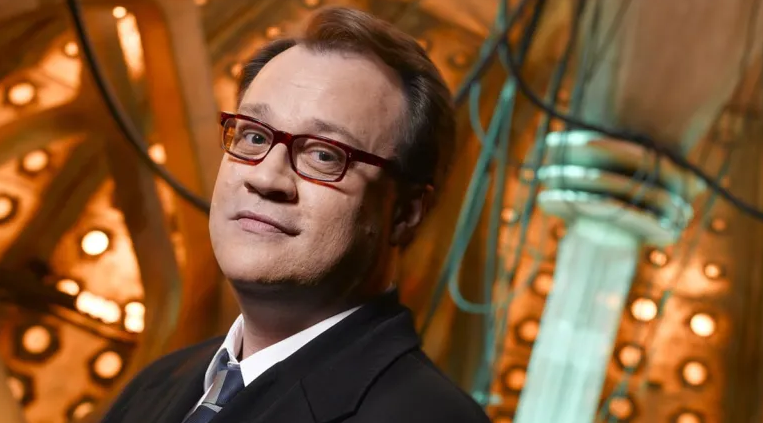
Russell T Davies had some house cleaning to do and he used the first three episodes — ostensibly a 60th anniversary celebration — of his return to Doctor Who as showrunner to do it.
Doctor Who, the venerable classic British science fiction television series has gone on long enough that some unwanted baggage was unavoidable. What Davies has done with this three “special episode” interlude is take on three specific troubling issues: one is a problematic story from early in the show’s history, another is a disappointing choice that RTD himself made in his initial run on the series and the third is the most modern of the show’s controversies.
Let’s take a look and see how he did.
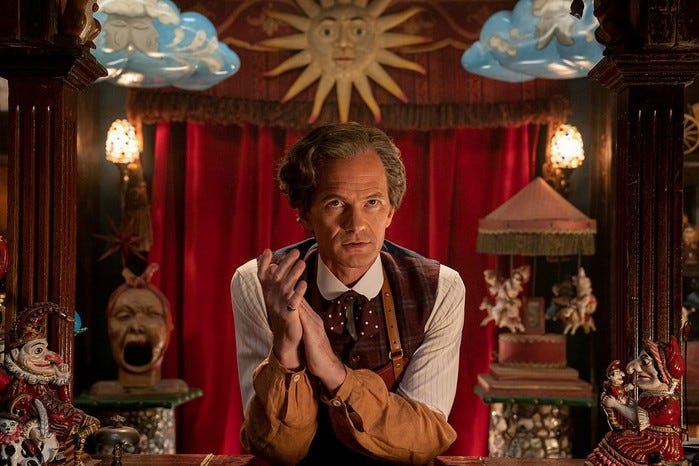
The Celestial Toymaker
Originally played by British acting legend Michael (Horror of Dracula/Batman Returns) Gough as a foil for The First Doctor (William Hartnell), The Toymaker is an incalculably powerful entity — think Q from Star Trek: The Next Generation — who lives in a sort of extra-dimensional space and is only bound by the rules of the games he delights in playing.
The Toymaker is a character with a certain amount of mystique around him, primarily because three of the four episodes of the story he appeared in in 1966 are lost and un-viewable since their original airing. We do have audio from them and the fourth episode was preserved and from these sources it is pretty clear that the original Toymaker story is mediocre, at best; but its unavailability has served its mythology well and people believe that they would think highly of it if they had seen it.
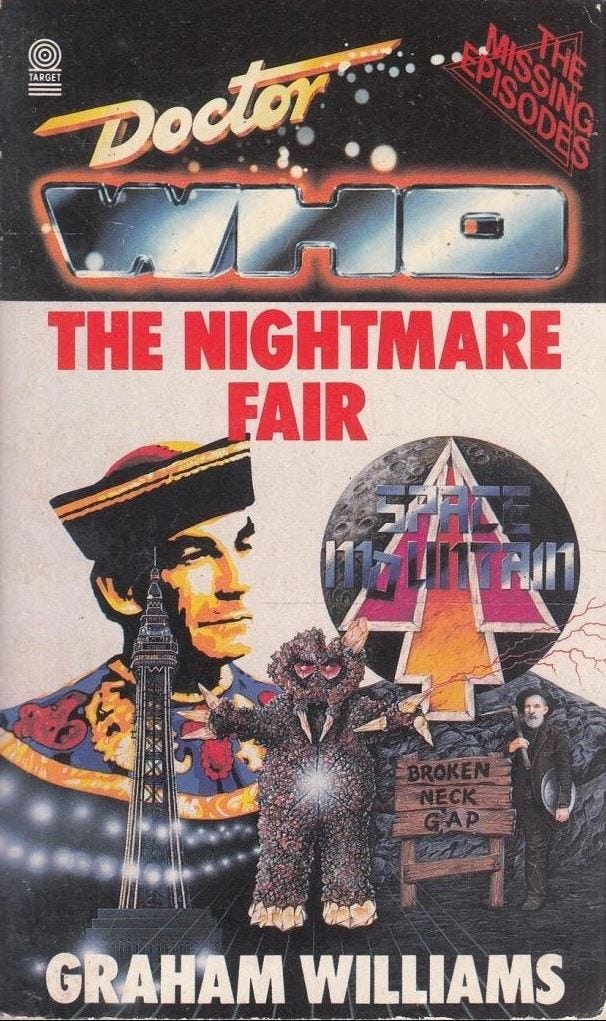
So fondly is people’s idealization of The Celestial Toymaker that his reappearance has been a rumor for much of the last 50-or-so years. He almost made it back in a story written for The Sixth Doctor’s third season, The Nightmare Fair, but which was never made due to the show being put on hiatus.
The Celestial Toymaker is an enigma; he is also very racist.
The term “celestial” has, thankfully, mostly fallen out of use in western countries, but was, in the late-nineteenth and early-twentieth centuries, an anti-Chinese slur that mockingly referenced China as the “Celestial Empire.” Accordingly, Gough wears faux-oriental robes and headgear for the entirety of the story and is even, at one point, described as “Mandarin.” (Sigh.)
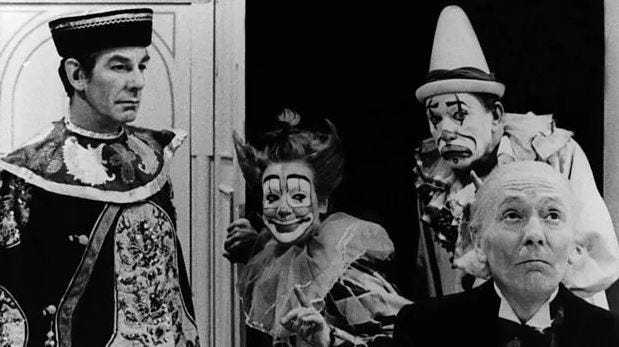
So here was a tall British white guy named after a racist slur, portraying a Fu-Manchu kind of villain wearing mock Chinese robes — thankfully Gough was either wise enough or not adept enough to use a fake accent. And that’s not the end of it. The story also contains the n-word.
Early versions of the nursery rhyme “Eenie Meenie Miney Moe” did not have a “tiger” being caught be his toe. Inexplicably, even though the word had already fallen out of acceptability, the nursery rhyme is repeated in the televised story with that slur included.
In many ways it is hard to understand why the story and its titular character have not been more deliberately swept under the rug.
Reforming this infamous villain seems like a strange task for RTD to have taken on as he launches this new era of Doctor Who particularly given the show’s brand new partnership with Disney, but take it on he does and with a surprisingly elegant solution. Rather than leave the character as a mock “Mandarin” villain, in the last of the three special episodes, The Giggle, he casts Neil Patrick Harris as the character who, at first, speaks in an outrageously over-the-top Bavarian accent — think “Hogan’s Heroes” crossed with Geppetto — and then later returns with a just as outrageous French one.
And then he insults another character with a racial innuendo based on the character’s skin color.
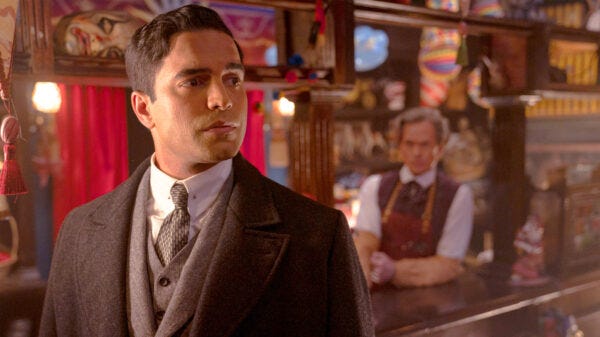
Toymaker: I really must apologize for the rain. You must be used to sunnier climes.
Charles Banerjee: I was born in Shelton. — The Giggle
That’s it. That’s all Davies needed to do in his script to turn the inherent racism of the character into a character for whom part of his evil was that he was a racist. To show him poorly mocking other cultures (German, French) allows us to re-frame the original Toymaker as a person who is not meant to have been Chinese in the serial in 1966, but one who is attempting a mockery of Chinese culture.
It is a narrative judo move, using the weight of the issues plaguing the character as part of what defines the character as evil. It’s brilliant.
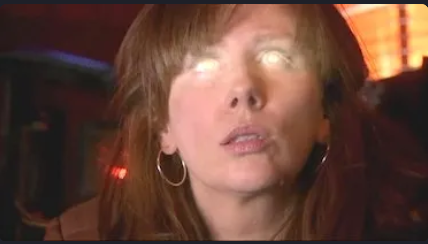
The DoctorDonna
Through a generally successful run presiding over the first several years of the revived Doctor Who which began in 2005, Russell T Davies made one major mistake. One could quibble at a number of small missteps or occasionally weak episodes, but one incident looms large as RTD’s biggest failure: the fate of Donna Noble (Catherine Tate).
To save the world, the popular travelling companion of The Tenth Doctor (David Tennant) was forced to take on the full force of his memories and knowledge which, being a human with a human-sized brain, she could not handle. She would die if the memories were allowed to continue to run riot through her brain.
This was where things got tricky.
The Doctor, in order to save her life, decided to perform a procedure to remove all memory of her adventures with him. He did this AGAINST HER WILL. Donna very clearly made the choice in the story that she would rather die than have this part of her life taken away from her. The Doctor, refusing to listen, removed the memories anyway.
The problem here is obvious: The Doctor has decided to take the right of self-determination away from his friend. The fact that it is a male/female relationship (albeit platonic) makes the lack of consent particularly troubling.
In the first of the three specials, The Star Beast, Davies takes this issue head-on.
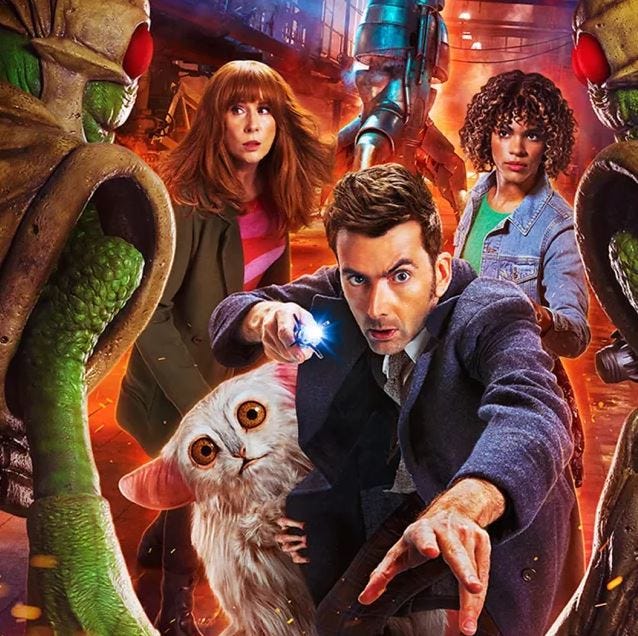
Donna, at the beginning of the episode, has a husband and daughter, but there is still something in the back of her mind that feels not quite whole. She has, erratically, given away all of the money that The Doctor arranged for her to win from the lottery — a metaphorical fifty pieces of silver if there ever was one — and has struggled to stay employed. While her family seems strong, she is otherwise distracted; as if the removal of her right of self-determination has also removed her ability to understand her place in the world.
The character of Donna Noble is beloved because she is not just a “companion” (a term she mocks in The Giggle), but is as strong willed and brave as The Doctor themselves. It turns out that even The Doctor’s mind-wipe is not enough to stop her drive; instead it has just redirected it into her daughter, Rose, who has been building a business crafting stuffed toys to try and help keep her family afloat.
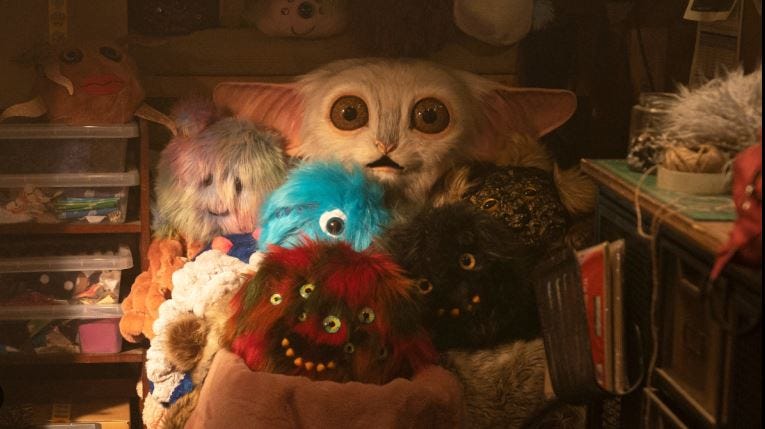
Donna Noble is a force of nature and her willpower will find a way.
As suspected, eventually the Doctor is forced to restore Donna’s memories which, even though she is fully aware that it means her death, brings her more joy than she has shown at any other moment in the episode. The showrunner has recognized this mistake and atoned, not only by acquiescing to the character’s choice, but in showing how the restoration of self-determination not only makes Donna whole again, but also her daughter, Rose, who has been carrying a sort of generational version of the suppressed memories herself — turns out those stuffies she’s been making are modeled after aliens that her mother and The Tenth Doctor encountered in their travels.
“After all these years, I’m finally me.”
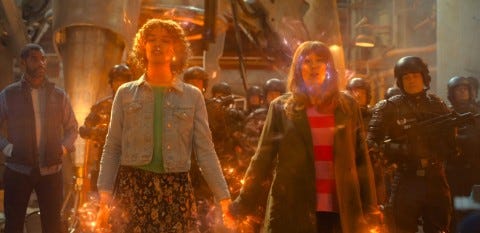
The subtext of Rose being a trans woman adds an element that re-enforces the criticality of self-determination, particularly when it comes to identity. Is Donna really Donna without choice? Is Rose?
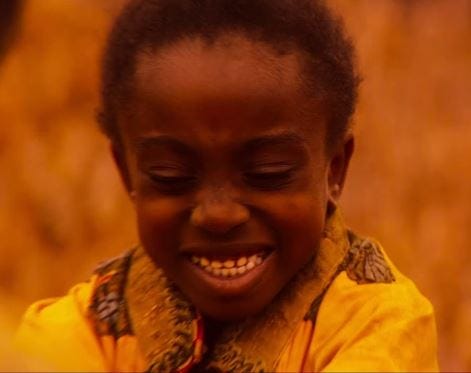
The Timeless Child
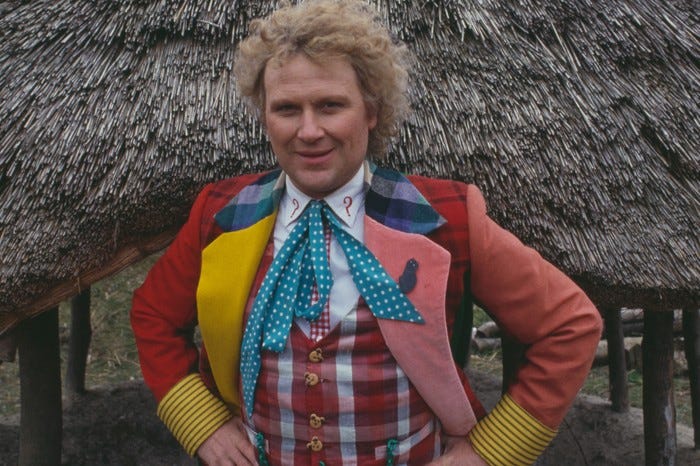
The folks claiming that this or that season of modern Doctor Who is stomping on some sort of pristine legacy didn’t spend a great deal of time with this guy:
And I will stand on Stephan Moffat’s desk in my muddy boots and tell him to his face that a lot of the Chris Chibnall show-run Thirteenth Doctor’s era was very good and not any more uneven than the Eleventh or Twelfth Doctors’ eras.
But we do all have to contend with the fact that in a wildly inconsistent period of the show’s history a showrunner who did not produce very many episodes radically re-wrote the show’s backstory.
Doctor Who is a sixty-year-old show about time travel. Everything contradicts everything. Yet, for the most part, The Timeless Child story works within the continuity (depending, of course, on what your version of Doctor Who continuity happens to be). The Doctor is now not a native of Gallifrey, but an entirely different creature who fell through some sort of dimensional rift and was found and raised — and abused — by a Gallifreyan named Tecteun.
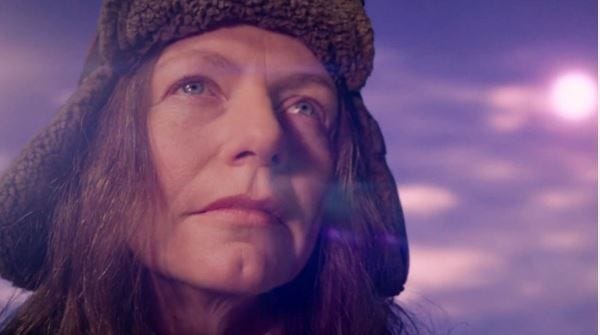
Tecteun discovered this “Timeless Child” could regenerate and spliced pieces of their DNA into her own giving her the ability as well. After passing the ability on to her particular caste of Gallifreyans, they became ascendant on the planet and started down the path that would make them the Time Lords that we know and love today.
Fans were mixed on this new addition to the mythology, but the ones who hated it REALLY hated it. Even some famous names from the show itself — such as one of my favorite writers/script editors in the show’s history, Andrew Cartmell — hated it. Fans wondered how Russell T Davies was going to deal with this massive upending of what had been the franchise’s core narrative for most (though not all) of its sixty years.
He embraced it.
Donna: So where are you from?
The Doctor: … You know it’s Gallifrey.
Donna: Except, it’s not… You don’t know where you’re from. — Wild Blue Yonder
This conversation between The Doctor and Donna goes on to explore the repercussions of Flux, the season-long Thirteenth Doctor story that wrapped up many of the threads introduced during The Timeless Child storyline. The discussion gives viewers the first substantial clue as to why The Doctor regenerated into The Tenth Doctor’s body and sought out Donna. The Doctor’s trauma, primarily due to the upending of their history with the discovery of the history of The Timeless Child as well as the horrific toll exacted upon life in the galaxy during the events of Flux had reached unmanageable levels and he had to be sent somewhere to stop and heal.
Donna’s family, after repairing the damage he had done to them, was the right place and time for The Doctor to land.
While other traumatic events from The Doctor’s past are referenced by The Toymaker in The Giggle, it is clear that the events of Flux and The Timeless Children were what sent the character over the edge.
Davies promised some months ago that he was “not going to unwrite Chris Chibnall” took it a step further. He made Chris Chibnall’s writing the motive force that launched this new era.
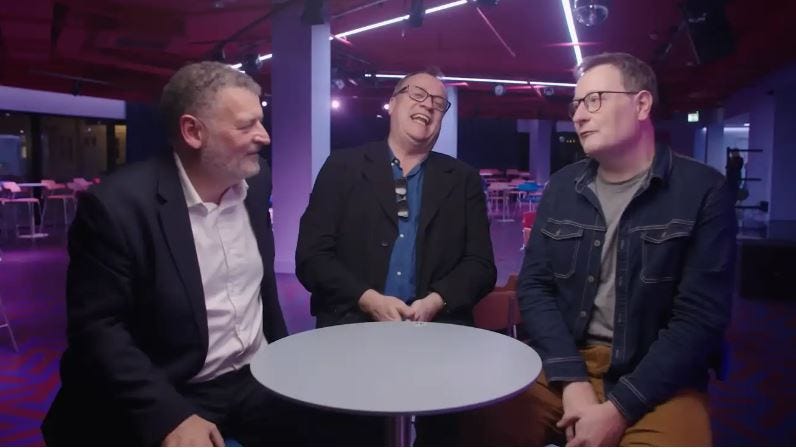
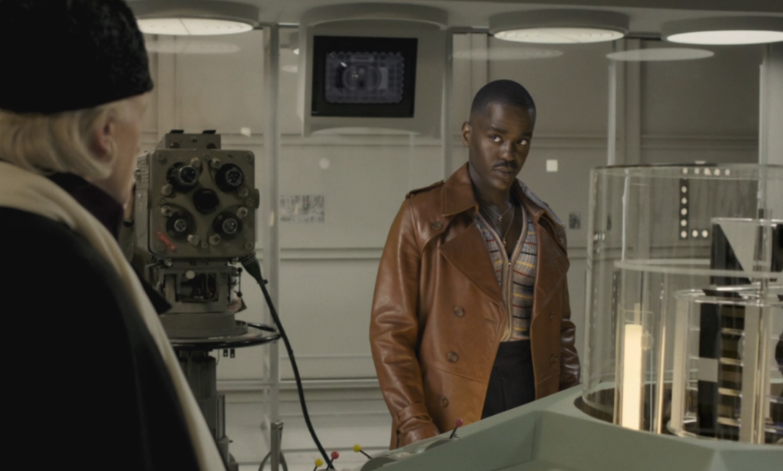
Where this all goes from here is anybody’s guess, but one thing seems clear, Russell T Davies knows where the show stands and has a vision for where it’s going. And he has cleared the deck of much unwanted baggage and unanswered questions so that he can enter into the era of The Fifteenth Doctor (Ncuti Gatwa) with clear eyes and open arms.
Help us keep the tea flowing at Abigail’s Army HQ. Please consider buying us a coffee or, better yet, tea on Ko-Fi.
https://ko-fi.com/abigailsarmy
Abigail’s Army is a progressive Disney fan group. We can be reached at our website:
Or over on Facebook in the Abigail’s Army progressive Disney fans group.
Or on Mastodon at @AbigailsArmy@mastodon.social.
Or on Threads at https://www.threads.net/@abigailsarmymajor