Doctor Who Versus the Bigots
The return of Doctor Who has proven a noisy affair.
When Disney CEO Bob Iger suggested that he was going to “quiet the noise” generated by the culture wars, he must’ve had no idea what he was getting into through his new partnership with the BBC’s long-running science fiction show, Doctor Who.
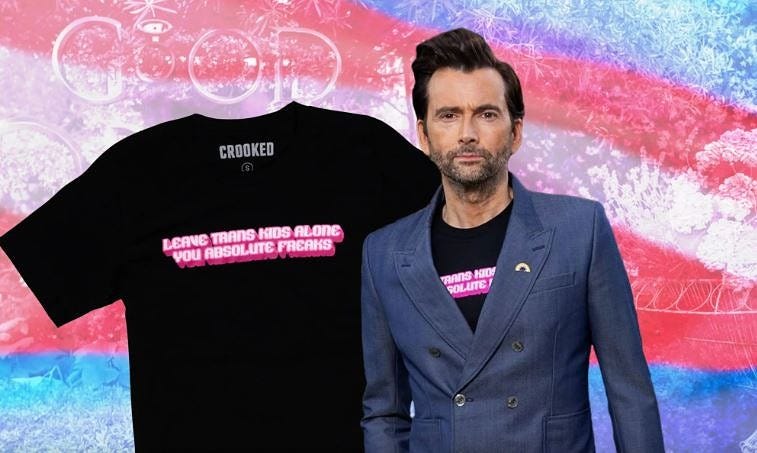
Recently taken over by returning showrunner Russell T Davies, who had produced the show’s successful run starting in 2005 — a man not afraid to stir the pot — early indications of what was coming when the show returned last week after a year-long hiatus would not have denoted any sort of “quieting.” As casting for the hotly awaited new series was announced it was hard not to notice trans actress Yasmin Finney, drag queen star Jinx Monsoon and a number of other LGBTQIA+ performers joining the ranks. Returning star David Tennant recently appeared with a “Leave trans kids alone you absolute freaks” t-shirt and donning a TARDIS pin with trans colors and, when questioned about it, remarked that this sort of inclusion was “what Doctor Who was always about.”
Davies himself responded to bigots trying to pick at trans representation in the new series by saying that there were some people who were:
“…full of absolute hate, and venom, and destruction and violence who would like to see that sort of thing wiped off the screen entirely… Shame on you and good luck to you in your lonely lives.” — Russell T Davies
Now this was all before a single second of RTD’s new Doctor Who — the series proper — had aired, but we got a taste before the official premier. We were treated to the first new, albeit brief, story of the Fourteenth Doctor: a benefit clip for Britain’s Children in Need charity where the Doctor meets one of his most iconic adversaries, Davros — the creator of the dreaded Daleks.
Now when Davros first appeared, and for the five decades that followed, he looked like this:
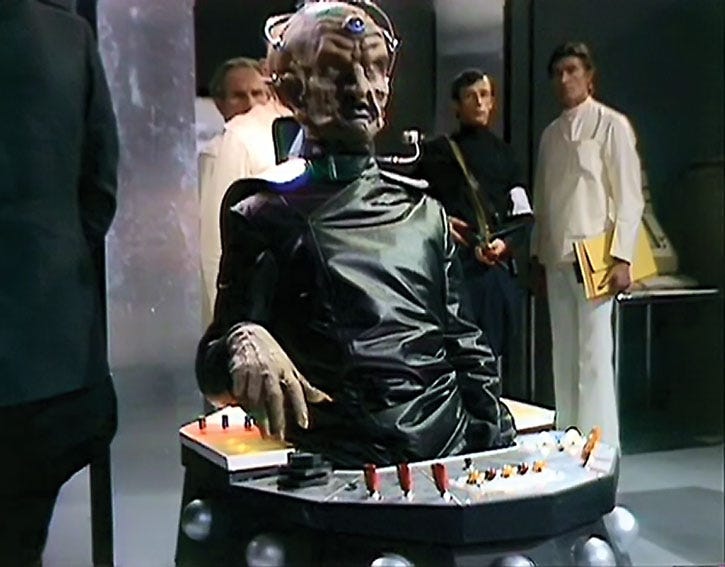
But in the Children in Need segment, he looked like this:
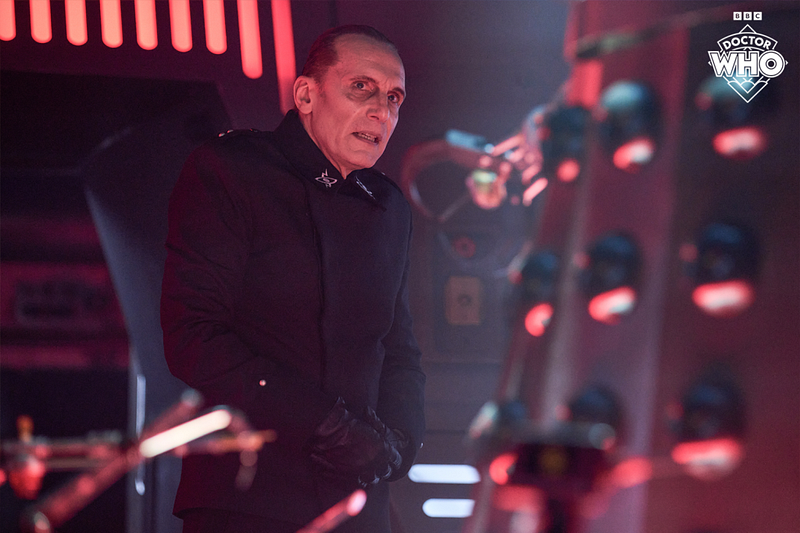
Why, you may ask?
“We had long conversations about bringing Davros back because he’s a fantastic character, but time, society, culture and taste have moved on, and there’s a problem with Davros of old, in that he’s a wheelchair user, who is evil.
“I had problems with that, and a lot of people on the production team had problems with that; associating disability with evil — and trust me, there’s a very long tradition of this.
“The world changes, and when the world changes, Doctor Who has to change as well.” — Russell T Davies
Oh, and let’s not at all downplay the casting of the, upcoming, Fifteenth Doctor, Ncuti Gatwa, a queer, black, actor who has been accused of being cast as a diversity “box-ticking” exercise and IS NOT HAVING IT:
“First of all, you don’t know anything about me. Secondly, tick f**king boxes. People need to be f**king seen. What are you going to do, tell the same stories? Have the same people fronting things for all of eternity?
“Representation and inclusivity and branching out … enriches us all. How embarrassing. You people with your tiny mind sets. Open a book, look out the window, then f*ck off.” — Ncuti Gatwa
All of this may well have given Mr. Iger some pause, but if he wanted another franchise to cozy up with that was going to lie down and be quiet, he really picked the wrong one. Perhaps Doctor Who is not the most liberal and progressive science fiction show in television history — that would be a hard claim to make when your lead has been white men for the first fifty years — but the show has historically pushed at boundaries. While Star Trek was fighting with the studio to have a woman First Officer on the fictional Enterprise bridge (unsuccessfully), Doctor Who, the show itself, had been produced by a woman for years. And its first director was a gay man from India. In 1963!
Bob Iger, if he was trying to appease the mob accusing Disney of going “woke,” could’ve looked at any one of these things and guessed that Doctor Who was not going to play along nicely. Or he could’ve looked back into the show’s history.
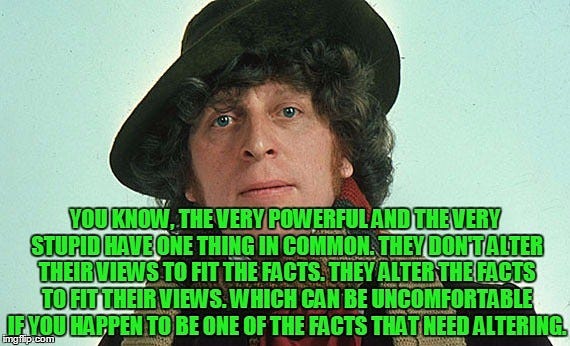
Doctor Who historically buzz-saws through formal institutions, especially if they are GOVERNMENT institutions, with tremendous scorn.
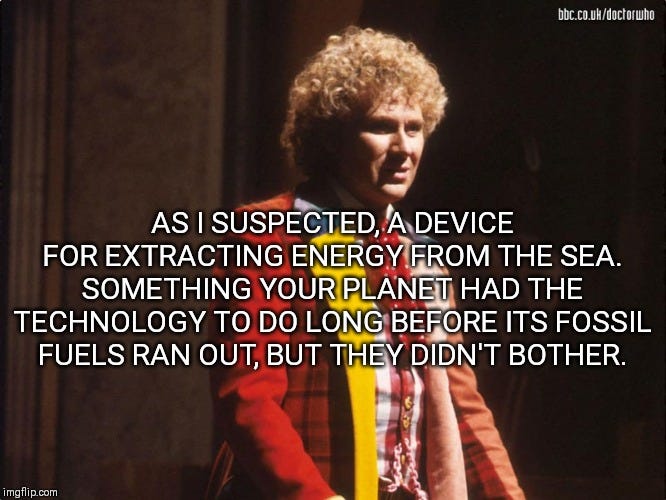
It has raised environmental concerns since the 60s.
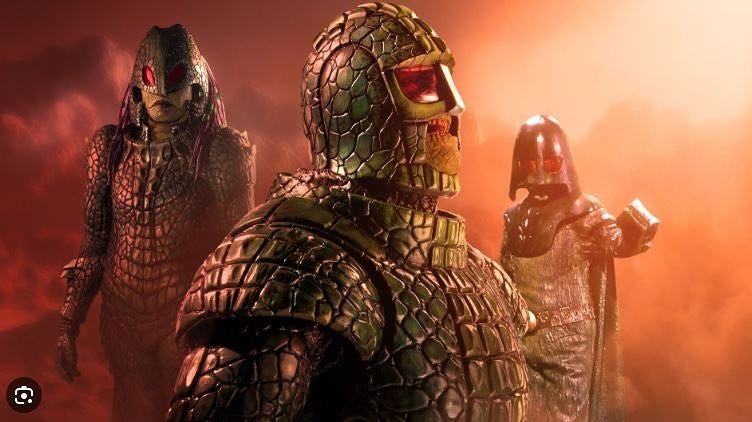
It also tries to look at all beings as deserving of your respect, even occasionally finding compassion for The Doctor’s deadliest enemies. (Doctor Who pulled that “villainous warrior race becomes noble friend” thing about two decades before Star Trek did.)
It is vehemently anti-bigotry:
“There’s a horror movie called Alien? That’s really offensive. No wonder everyone keeps invading you.” — The Twelfth Doctor
The show, particularly since its revival in 2005, has been a leader in colorblind casting for historical figures, in LGBTQIA+ representation and has often, seemingly deliberately, shocked its own fans with the extent of its progressive audacity.
So when Disney partnered up with the BBC to distribute Doctor Who on its streaming service (and, by some accounts, almost triple Who’s previous budget) they probably should’ve seen what was coming; and when the first of the three special episodes with David Tennant and Catherine Tate reprising their roles as The Doctor and Donna Noble came last Saturday, no punches were pulled.
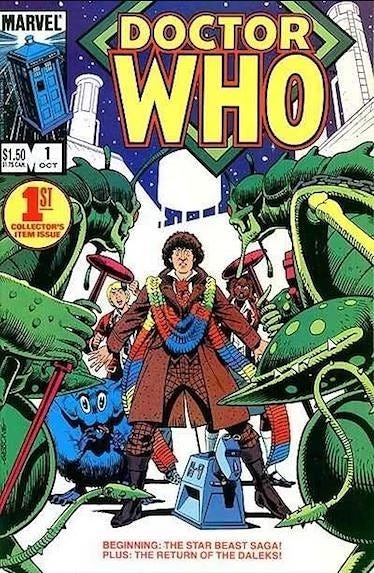
RTD did make a few really clever preliminary moves in the episode understanding that he was tossing a political hand-grenade through the television at tea time. He buried the episode in pillows of fan pleasing nostalgia. The plot was heavily adapted from a beloved ‘80s Doctor Who comic, Doctor Who and the Star Beast, written by 2000AD’s John Wagner and Pat Mills and drawn by Dave “Watchmen” Gibbons.
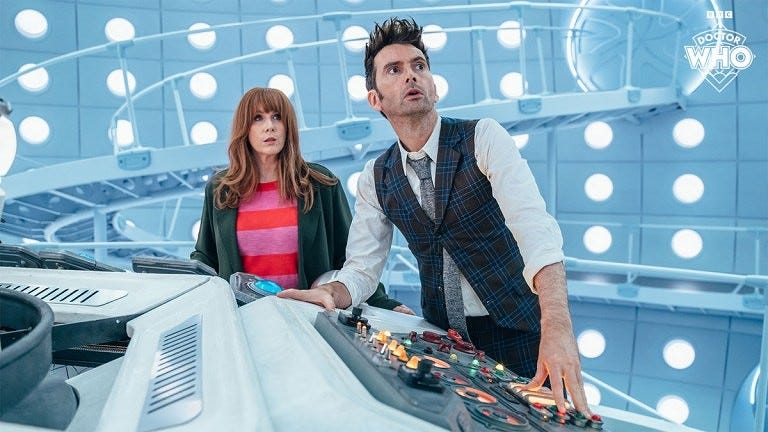
Then, of course, he brought back the most popular Doctor/Companion duo of the modern, Nu-Who, era: Tate and Tennant. He also redesigned the TARDIS interior giving it back it’s classic-Who white walls with roundels.
He brought back UNIT, the paramilitary organization that The Doctor, often begrudgingly, began consulting with in the Third Doctor’s era.
There is even what seems to be a reference to the Fourth Doctor story The Stones of Blood.
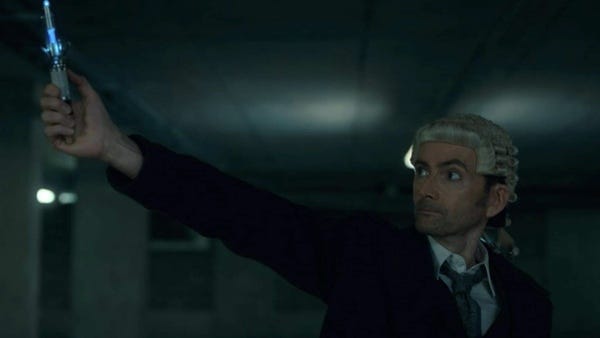
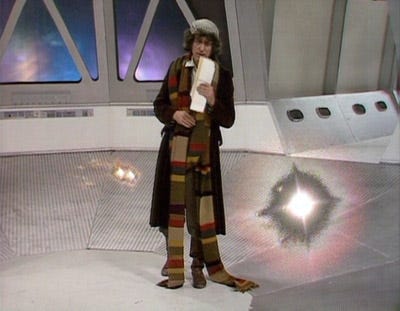
Davies, in other words, stacked the deck. If fans were going to complain, it wasn’t going to be because he didn’t show love for the show.
And then Russell Davies said the things he really wanted to say.
Donna Noble’s daughter is a trans woman named Rose. Through the episode we don’t see this through rose-colored glasses, however. (See what I did there?) We see the loneliness and anxiety that comes with her being constantly wary of the prejudice around her; we see her dead-named by cruel local kids in her neighborhood. But we also see a person being confident in who they are, and that confidence saves London.
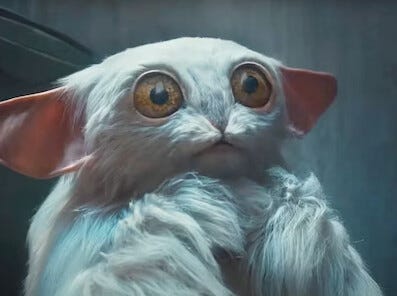
I won’t try to pull the wool over your eyes, here, some of this doesn’t quite work, narratively, but there is such joy in it that maybe that’s ok. Seeing Donna, Rose’s mum, explain just how far she’ll go to protect her daughter (“I would burn down the world for you, darling. Anyone has a go, I will be there and I will descend.”); seeing the Doctor asking the alien, Beep-the-Meep, their pronouns; and, most importantly, seeing Rose’s complete fruition as a trans woman (“After all these years. I’m finally me!”) and it being the reason that she is adaptable to the tremendous Time Lord energy that has been passed down to her, unknowingly, by her mother: being able to use that energy to literally save the day, is just glorious.
Hammer hit over the head, sure. So what? As a wonderful Den of Geek article has already pointed out, “Was it subtle? Christ no. But we are living in times when it is more important to be understood than it is to look clever.”
Is the episode a little janky? Sure. Does it take some big swings? You betcha. Hits some of them too, the important ones.
But there’s something about this episode that I think is really profound and isn’t getting a lot of attention. While we can all agree on the variable quality of writing during his original run on the show (most of it very good), Russell T Davies did make one, almost universally acknowledged, mistake, and that was the end of Donna Noble’s story.
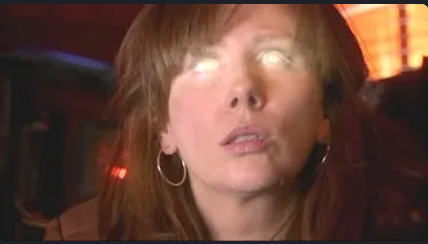
Donna Noble saved the universe by taking an extraordinary amount of Time Lord energy into her brain (the aforementioned energy that her daughter was able to manage). A human brain can’t handle it and the only way to keep her alive was for The Doctor to wipe her mind of all memory of her travels with him. She begged him not to do it. She was willing to die rather than lose that time, that part of her life.
He took it from her anyway.
Even at the time we recognized that as a violation; a complicated moral quandary, yes, but a violation of Donna Noble that the show did not seem to accept as the wrong choice. Doctor Who as a series has usually been good at taking a pause and looking at repercussions.
When Tegan, companion to The Fifth Doctor, left, walking past a pile of bodies at the end of Resurrection of the Daleks after saying, “A lot of good people have died today. I’m sick of it,” you couldn’t help but take a pause and wonder if The Doctor had actually done the right thing, if the show could maintain a stance of being on moral high ground.
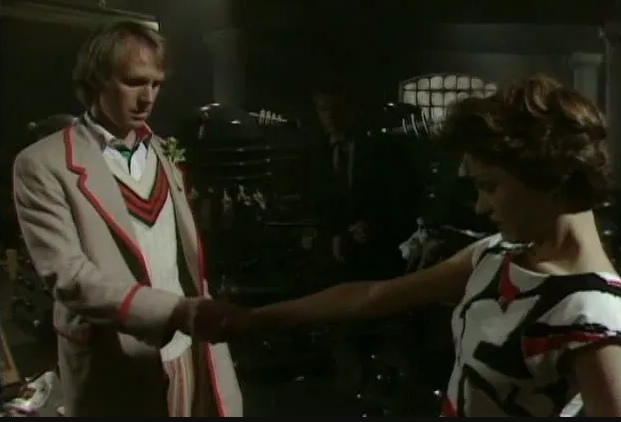
When The Doctor wiped Donna’s memories, nothing of the sort happened.
And that is why it is so important that Davies, as he’s getting on his well-justified soapbox, takes the time to right this clear wrong. He brings Donna back, returns her memory and gives she AND her daughter special abilities for having carried this for so long.
He clears his slate first, as we all should learn to do, and then preaches.
I had wondered for a while why Disney’s embrace of Doctor Who seemed to have loosened in the last half year. Disney+ wasn’t going to air any earlier episodes. It was ignoring the large cluster of peripheral stuff — The Whoniverse — that the BBC was making available in England.
But maybe it’s not so puzzling. Bob Iger ordered some good British tea. And it came too hot for the American palette.
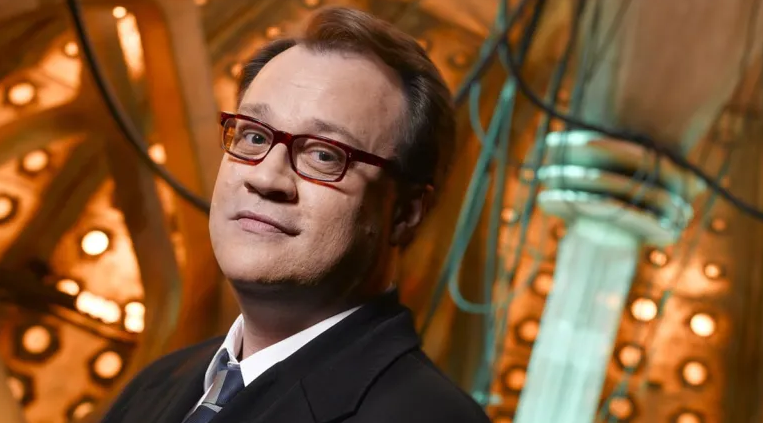
Welcome back Russell… and give ’em hell!
Help us keep the tea flowing at Abigail’s Army HQ. Please consider buying us a coffee or, better yet, tea on Ko-Fi.
https://ko-fi.com/abigailsarmy
Abigail’s Army is a progressive Disney fan group. We can be reached at our website:
Or over on Facebook in the Abigail’s Army progressive Disney fans group.
Or on Mastodon at @AbigailsArmy@mastodon.social.